By data, we mean how fast the code that makes your HD streaming, game connection and internet surfing is able to go back and forth to a server. The faster the line, the faster and more data you can send and receive to and from a server.
Do I need Fibre Broadband?
You may not notice it all the time, but if you live in a shared house with a family and everyone is using the internet at the same time, your home’s allocated data is split between each user.
If you’re streaming your favourite show, you may notice the occasional buffering or quality change. Not to mention when you connect to the internet at peak times with hundreds of other users all connecting at once.
Imagine you’re in the middle of downloading a critical file for work with a slow connection. What if you’re playing a competitive video game and that one moment of slow connection costs you the game. It gets frustrating, doesn’t it?
If this happens far too often for your liking, then maybe it’s time to get an upgrade.
How does Fibre work?
As previously mentioned, fibre uses fibre optic cabling, which are able to deliver much higher speeds over much greater distances. The data travels at the literal speed of light. Unlike copper wires where certain electrical signatures either produced a one or zero for binary, fibre sends light signals down the wire at 186,000 miles per second in a sequence to create binary, the language that computers speak.
According to Ofcom, most UK homes still use ADSL broadband which uses standard copper phone lines. Although efforts by Openreach and partners are being made to supply fibre to as many homes as possible it is a big task to undergo.
Fibre to the Cabinet, sometimes referred to as ‘superfast broadband’ the fibre optic cable is run to a telephone exchange box where a copper cable is run the remainder of the distance to the property. You probably have seen these cabinets, a dark green cabinet, located all over the country.
What is FTTP?
Fibre to the Property which can also be called FTTH (fibre to the home), this is the ultra-fast broadband or full fibre broadband. Fibre optic cables are run the entire way into your home, this is the fastest domestic broadband speeds currently available however, availability is scarce depending on where you live.
How fast is Fibre Broadband?
Ultra-fast FTTP connections offer a minimum download of 300Mbps according to Ofcom. Superfast broadband FTTC minimum download is around 30Mbps.
Although, the actual speed is rather determined based on how far away your home is from the street cabinet. There are some other things that can affect your top speeds;
Fibre optic cables are built to last. Much more resistant than copper wires, fibre can handle most things you could throw at it, such as, electrical interference and cold weather.
Signal Strength
The further away from an exchange you are, the more your signal strength will drop. Fibre is able to transport larger amounts of data over greater distances compared to copper lines.
Bandwidth
Bandwidth is determined by the amount of data that you can transfer in a certain time. Low bandwidth equals slow internet, especially if you have multiple users.
Copper cables were not originally designed to transfer data. The further the cable runs from a cabinet, the more bandwidth they lose. FTTC was introduced to combat slow internet speeds by making the copper cable only part of the way. FTTP loses no bandwidth whatsoever.
Can I get Fibre?
Now you know more, now is the time to see if you can get fibre. Just enter your postcode and address into our checker to see if it is available.
SoGEA stands for Single Order General Ethernet Access, a bit of a mouthful, probably best we stick to the abbreviation. This line utilises the existing copper phone line to connect the network, these phone lines can be found in almost every building in the country. However, instead of phone calls they are repurposed to transfer data.
SoGEA is an interim solution for areas that currently don’t have access to fibre connection. SoGEA is quicker and cheaper to install than Fibre to the Cabinet (FTTC) because it doesn’t require any new infrastructure. Also due to it being a single order line issues can be identified and resolved quickly, another perk is the better service that you’ll receive. Without the phone line interfering traffic is gone meaning you receive better connection speeds.
What’s the difference between SoGEA and FTTC?
Fibre to the cabinet is currently the most common type of broadband connection. Utilising a blend of copper and fibre wires to deliver your property broadband. However, your top speed will always be determined by the slowest part of the wire.
The main difference is mainly within the infrastructure, currently a FTTC connection has a phone line with a fibre broadband connected over the top of it.
Openreach has launched SoGEA, this means no copper phone line is needed. SoGEA broadband just needs to be ordered with no line rental to worry about.
What’s the difference between SoGEA and FTTP?
Fibre to the Premises/Property is a fully fibre connection, from the supplier to the property it is complete fibre cable. Full fibre is becoming available to both residential and business properties but Openreach faces a challenge to supply all the properties with full fibre. SoGEA provides an interim for your property if fibre is not yet available.
FTTP has un-rivalled speeds, if FTTP is available it should be the first choice. Realistically FTTP is the fastest we will be able to go for a while unless we find a way to move something faster than light.
Both are easy to install, cost-effective, and easy to fix. FTTP is an ideal solution for businesses which rely on high internet speeds especially with the move over to VOIP systems.
Do you need to move to SoGEA?
You may know that Openreach are shutting down the ISDN and PSTN network in 2025, many businesses and households still use this connection despite the shutoff being right around the corner. If Fibre isn’t available for you then you may need to consider moving to SoGEA sooner than later.
Need to move? We can do that for you. We offer super-fast SoGEA and full fibre broadband options.
Want to know what speeds you can reach? Get in touch today for a quote same day.
Do you find that your WiFi doesn’t reach all around your home? Perhaps your one too many rooms away from the router and you notice extended buffering and generally slow performance.
Maybe some parts of your property there is no signal at all where even loading a web page seems to take an eternity.
Usually these ‘black spots’ are often caused by distance, thick walls like brick and interference from other devices.
Nowadays WiFi is essential especially since working from home has become the new norm with video calls and cloud sharing becoming more popular. So when your WiFi keeps dropping out it can get increasingly frustrating and disruptive.
Luckily there are many different ways to extend your routers range all around your property to give you the same performance as if you were right next to the router.
Move the router
The easiest option would be to move the router to a better spot. Sounds simple enough but there are a few tricks to placing the router in the best spot.
Firstly have the router out in the open preferably in a raised place, not in a cupboard or behind the TV. Also getting the router as close to the centre of the house as possible will help distribute a signal evenly.
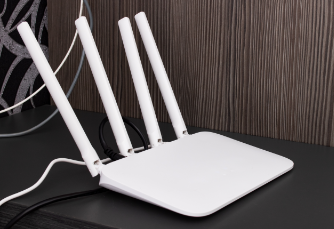
Although something of the past now some routers still have antennas and adjusting them to be perpendicular to the router will help. Antennas send the best signal out of the sides and less out of the top and bottom. Also if your router has multiple antenna your could position them accordingly to target certain parts of the house.
Upgrade the router
If moving your router around seems to not solve anything then perhaps your router is not powerful enough or too old. If this is the case then maybe its time to upgrade it to a newer one, most ISPs give these out if you ask and being a long-time user of the provider may help you out. Just watch out if they try to sell you a new contract.
The oldest to newest WiFi standards are: 802.11b, 802.11g, 802.11n, 802.11ac and WiFi 6. If you have an older “b” or “g” wireless router we really recommend upgrading.
A common misconception is that the latest WiFi standard gives you the best performance and range. While this is partially true the best speeds come at the expense of range so you’ll actually get the best coverage from a router with really good performance using 2.4GHz, not 5GHz.
However, this merges with the next option of a mesh WiFi.
Mesh WiFi kit
A mesh WiFi network is when two or more routers work together to provide the best coverage than what a single router could deliver. What it does is replace your existing routers WiFi and although this sounds confusing the process has been made very simple so that people with little to no knowledge of IT can set it up.
To set up a WiFi mesh kit connect the main device to the router via ethernet and put the other mesh devices around the house. Depending on what sort of coverage you need and how big the property is you may need one or more mesh devices. All the devices communicate with one another creating a reliable connection around the house even into the garden.
Powerline adapters
One of our most recommended options would be to use your properties electrical circuit. Powerline adapters are similar to mesh kits where a module is in each room that wants to be boosted. These even can work in places such as garages or outhouses.
All you need to do is plug an adapter into a power socket near the router and connect the two via ethernet. Then plug in the extenders in the rooms that you want a boosted signal in and press a few linking buttons and you’re all setup.
Depending on what model you get sometimes the extenders create new connections which sometimes means you have to switch your internet. However there are some good ones that simply work off the main connection meaning you don’t have to switch around when going into different rooms.
Powerline adapters are more expensive than mesh kits however they mirror the signal that the router provides meaning no loss of bandwidth on each extender.
Wireless boosters
WiFi extenders which also go by repeaters or boosters increase your WiFi signal by capturing the wireless signal from your router and then rebroadcasting it. These do work however are not the best option if you require extremely fast WiFi speeds.
These are very cheap and very easy to install with some models little than £20 or so. However these use the older 801.11n standard. There are newer models if you’re looking for something slightly faster, 802.11ac boosters can be brought for around £35.
They work by having two halves of an antenna, one to receive and one to transmit which effectively halves the potential speed of the original WiFi signal.
Realistically this shouldn’t be too much of a problem if you are doing basic things like browsing the web but you could see some buffering if trying to stream in HD or downloading large files.
Wireless boosters work best when placed in a central location and are not to far away from the main router. If you think that putting a booster in a place where the connection is bad it will do no good as it is just spreading around a weak signal and will reduce the speed of the rest of the network.
So the best spot for the booster is somewhere in the middle between the router and the desired device that you want to be connected.
Using 2.4GHz instead of 5GHz WiFi
If you didn’t know WiFi uses two frequency bands: 2.4GHz and 5GHz. Most people think that the fastest option would be 5GHz. In a technical sense you’d be correct 5GHz is faster than 2.4GHz however you’d have to sacrifice the walls and ceilings in your house or sit right next to the router.
This is because 5GHz cannot penetrate walls, ceilings or anything because of its wavelength. The higher the frequency the shorter the wavelength.
2.4GHz is much better at delivering a signal over greater distances but at slower speeds. That is why you may benefit from forcing your device to connect to the 2.4GHz network instead. Most basic routers combine the network so separating them can sometimes be a challenge.
If this is the case then all you have to do is log into the settings web page (type your routers IP directly into a browser) and look for a WiFi menu where you can split the two frequencies into two entities.
Bear in mind some household devices can interfere with a 2.4GHz connection such as baby monitors, Bluetooth, Microwaves and more. These can reduce the speed and range a WiFi signal has.
Ultimately you have to decide if you want a greater range with lower speeds or shorter range with greater speeds. Mileage may differ but it is very well worth understanding the difference between the WiFi bands and use it for your advantage.
Conclusion
There are many different ways of boosting a WiFi signal over your property. Some options are much better than others but really it depends on what property that you have. There are many different things that can influence the choice of WiFi extender, such as what your properties internals are made out of such as brick or plaster, also the size of the coverage that you want should influence your choice. It is easy to forget the reliability of your broadband causing an issue. If your property can’t currently get FTTP then SoGEA is the best alternative for speed and reliability.
All the options that we’ve covered in this article are viable options but if you’re having trouble deciding what would best suit you, don’t worry.
Here at ATS Connection we can find the best option for your property and install everything to ensure that you receive top-notch WiFi everywhere.
If you do want a professional opinion feel free to call us at: 01903 357002 or alternatively email us at contact@aruntechsupport.co.uk
Whether your business is transitioning back to an office atmosphere or your workforce will continue to work remotely, you are more vulnerable to network security attacks than ever before. Threat actors (those who represent a security risk to your network) are after the data on your network and are working hard to obtain it. Here are the top four network security concerns to assist you comprehend the issue.
Ransomware
Ransomware is a serious threat to your business, especially because it is so difficult to detect.
Gone are the days when you had a virus and it just showed up and said hello. Ransomware infiltrates your system, embeds itself in everything, and then attacks!
It can take weeks or even months for a breach to be discovered. The time it takes to identify something is increasing.
In 2016, Fireye reported a global average of 146 days. According to IBM calculations, it is already 228 days, according to a Varonis report from 2021.
A data breach’s cost is calculated in terms of time, money, and reputational damage. You must have the assurance that you are safe.
Social engineering
Why should threat actors put forth the effort to get past your endpoint and network protection when they can use your employees to do so? This fundamental concept is what makes social engineering such a danger to network security.
“Psychological manipulation to fool users into making security blunders or giving out sensitive information,” according to the best definition we’ve seen.
Phishing assaults (emails posing as a senior member of staff in order to obtain information or money) are the most popular tool in the social engineering toolkit.
Another example is hacked websites. Cyber hackers are always trying to break into trusted websites in order to steal information or gain access to your network.
In the real world, a developing method of attack is being used. Malware-infected USB sticks are put outside of targets in the hopes that they would be picked up.
People are intrigued when they are referred to as “staff bonuses” or “salary raises.” When they plug them into their laptops, the malware is released, and the problems begin.
This is a staff education challenge for you, and our blog has a number of items that can help.
Crypto-mining
You can obtain crypto-currencies in one of two ways: by purchasing them or by mining for them. Crypto-mining necessitates a significant amount of computer power.
Breaching your network and using your devices’ computing power is a growing issue.
According to Cisco statistics, 69 percent of businesses have faced some kind of harm as a result of this. As the value of crypto-currencies rises, so does the degree of activity.
Bitcoin was trading at £45,000 per coin at the time of writing, a new high.
Although this threat appears to be minor at first, it frequently serves as a stepping stone to more serious cybercrime. They can do a lot more than just use your processing power once they’re in.
You may have been hacked by a cyberminer if your AWS computing charges have increased or your bandwidth is always blocked.
DDoS attacks
Although Systems IT does not provide website hosting, this is an increasing issue, which is why we’re talking about it now.
DDoS (distributed denial of service) attacks grew by 55% in the 15 months leading up to March 2021, with NSFOCUS reporting that they had detected over 152,000 attacks by December 2020.
The majority of DDoS attacks appear to be motivated by people disagreeing with your policies/beliefs or by you offending someone – whether intentionally or unintentionally. In the first half of 2021, the biotech and pharmaceutical industries were the most targeted.
A network security breach has three costs, as previously stated:
Time: a significant amount of time is lost, both in attempting to repair the damage and simply in downtime as your staff is unable to function.
Money: Whether you pay a ransom to get your data back or merely calculate the cost of lost revenue, it can soon add up.
Reputation: there are three considerations to consider here:
Do you wish to inform your clients that your company has been hacked? What will they think of you, and will they decide to work with you again?
If your Personally Identifiable Information (PII) data has been accessed, you must notify everyone who may be affected, according to ICO regulations. The combination of a reputational risk and an increase in “ambulance-chasing” legal action can be devastating to your company.
What will your colleagues think of you if you refuse to increase the security around your network? Of course, enhancing security has a cost, but isn’t it far less than the costs we’ve discussed?
Survival
In the end, it could be the difference between your company growing and surviving.
Within six months, 50% of organisations that have had a data breach have shut down.
Even if they do survive, the impact of all of the above on the bottom line will be felt for a long time.
These risks frequently go undiscovered for weeks or months, as stated earlier in the essay.
Over time, the amount of damage is steadily increasing.
The sooner you identify a breach and begin responding, the less damage is done.
The purpose of this article was to inform you about the threats that your network and business face.
The next one will focus on how you can defend yourself. Simply subscribe here if you don’t want to miss that article.
If none of the expenses listed above appeal to you, let’s discuss how ATS can assist you in protecting your network. Call us on 01903 357002 or send us an email. With cyber crime kill chains on the rise, it has never been more important to ensure you are protected than now. Check out out cyber security services here
Do you have issues connecting to the internet in some parts of your home? Does browsing the web become a chore? Is your line just slow to begin with?
There are many reasons why your WiFi signal could be slow and generally not work, below we’ll be looking at some of the reasons and how you could go about to fix the problems.
Router positioning
Some people like to hide their routers in cabinets and other enclosed spaces to keep their home clear of wires and boxes. Unfortunately enclosing routers is one of the main reasons for slow WiFi speeds.
This is because the signal has to pass through material which ultimately slows it down, as routers distribute a wavelength depending on the speed. 2.4GHz is the standard frequency that routers distribute on because it has a wavelength that can pass through walls. This wavelength when it collides with an obstacle such as a wall shortens which ultimately hinders the maximum data flow.
The way to fix this issue is very simple. Place the router in an open place preferably raised off the floor and roughly in the centre of the property. This will have an even amount of signal all over the property. Or alternatively place the router close to a device that you want the best speeds on, we also suggest using an ethernet cable if possible.
Keep the router updated
Another easy option would be to keep your router updated on the most recent firmware and hardware. Most modern routers are able to update themselves firmware wise however can be limited by their hardware.
Routers are mainly made to give out the maximum signal that is available at the time and when the signal improves the router can’t keep up and isn’t giving out your full potential signal strength.
If you think that your router isn’t giving out the best WiFi it should be giving then perhaps it’s time for a replacement. If you are with a large ISP then most likely you can ask for a newer version router, they’ll more times than not try to avoid sending you a new one and say that your speeds are fine so slightly more persuasion may be required. Also you should be careful not to be signed into a new contract especially if it’s more expensive than your current one.
Antenna configuration
Depending on what router that you have you may still have antennae on your router. Most modern routers have an antenna inside of it but if you have purchased a much more powerful router then most likely they will have multiple antennae which can be configured.
If you do have antennae on your router you may not know but they should be configured in a particular way for the maximum effect. The best signal comes out of the sides of the antenna not the top or bottom, this means that you can point the antennae accordingly to maximise the coverage of your home. This links with router positioning as well as having the router in the optimal spot with antennae facing towards high usage devices.
So what you want to do is have the antennae facing straight up or with the side towards a priority device. That’s it, it’s a very simple fix and can be altered at anywhere.
Stop wifi leeches
The need for accessible WiFi nowadays is greater than ever and if you have personal WiFi best make sure that it is encrypted and has a strong password because if you think your neighbours aren’t going to use it you’d be wrong.
Usually all the passwords that are given to you by default are very strong so you shouldn’t need to worry too much about intruders getting onto your WiFi unless they get hold of the card with all the details.
Many people don’t know but you can change your WiFi details such as the name and the password by typing your routers IP into a search engine while connected to it. Which may be a good idea if you have had the same password for a long time or if you want something slightly more memorable.
If you are changing your password remember to create the strongest one you can by doing the following;
Include a combination of lower and uppercase characters
Avoid common passwords like 123456, qwerty and so on.
We recommend eight characters minimum for any password. Short passwords can be brute forced.
Avoid personal details like your name or any dates.
Never write you password down on anything physical. If you can’t remember it store it in a password manager.
Some routers may provide a guest network which can be turned on from the settings page which creates a separate connection with different details. This is the best option if you have multiple guests connected to the WiFi.
Use repeaters, extenders or boosters
We have a much more detailed article of all the different options that you have here. Really to find the best option for your home you may need to survey your property to see where the weak spots are and figure out how many extenders that you might need. All the options that you have use different ways of connecting and vary in price.
Now, you may get into all sorts of confusion when searching for WiFi boosters etc due to the amount of devices on the market! So here are ones we tend to recommend:
The above items vary in price but hopefully that gives you a good idea on where to start.
If you are interested, here at ATS Connection we can give you an expert opinion on the best option for you. Well even set everything up for you!
Your property location
If you live in a rural area you are most likely going to get worse speeds than those in towns and cities. This is because most of these locations still use copper cables to connect the properties from a cabinet that receives fibre.
ISPs don’t see a profit in upgrading these rural areas and instead prioritise towns and cites first, this is understandable when looking from a business standpoint but for the consumer can be very irritating. There are other ways of connecting your property instead of outdated copper wires. One of the best solutions that we personally have had with those in rural areas is mobile broadband. How they work is they use a mobile signal much like your mobile phone. Instead an antenna is put at a high point of your property that goes to a router with a mobile SIM inside.
Use a different wifi channel
Similar to lanes on a highway there are multiple WiFi channels which a WiFi router can broadcast from. Most countries have six standard channels which WiFi uses and very commonly your router will use channels one and six.
This creates a jam on the line as many packets of data are trying to use the same channel which will create a backlog and slow your connection down. The solution for this is to find out which channel is the least occupied and manually switch your router to it. To do this;
Log into your router as admin.
Go to settings and find Wireless Settings
Find an option that has Channel and most likely the setting will be on auto.
Switch to the desired channel.
Save your settings and wait for a few minutes for it to switch.
Prioritise applications
Some applications like streaming services or online gaming use a lot of bandwidth and if there are many things connected to your router at once it can slow down your speeds. Luckily modern routers provide a quality of service (QoS) which allows users to prioritise certain applications over others. This stops other people from interrupting your streaming session when on the same network.
This is also done within the router admin panel. Although some admin panels are far from intuitive and can be difficult to change these settings. If you have any doubts about any changes that you are making be sure to research your changes before applying or contact your ISP directly.
Use the latest wifi technologies
The newest wireless standard 802.11ac and WiFi-6 offers a superior download and upload speed compared to its older counterparts. Make sure that your router is compatible with the latest WiFi standards and that other devices in your home are able to receive the same WiFi standard otherwise this exercise may be pointless.
To find out what standard your router uses you could contact your ISP or find a manual either digitally or physically. If you do have a non compatible router then perhaps its time to upgrade, some ISPs depending on how long you’ve been with them may send you an upgraded router for free otherwise you might have to purchase one yourself.
If you are starting from scratch then unless you are on a very strict budget you should get the best option that you can get even if it’s a bit more expensive as then you will have an exceptional WiFi connection and are relatively future-proofed. Routers generally should have a lifespan of five years as that is how long it usually takes for a new WiFi standard to be released. Also you should look for routers that come with extra perks like the previously stated quality of service and guest networks.
Switch your routers frequency
Your router comes with two standard frequencies, 2.4Ghz and 5Ghz. You are most likely using a 2.4GHz frequency when connected to your router as it is the most versatile at long distances although is slower than 5GHz. 5GHz is the faster option with one major downfall, distance. 5GHz frequency’s have an extremely short range and have no penetration so the router would have to be in clear sight and close to the device that you want to receive the best signal.
Most routers combine the frequencies to keep things simple but the two can be separated again in the admin panel for the router usually under wireless settings. We recommend that you use both frequencies in conjunction to avoid any dropouts if you leave the range of the router.
Reboot your router
The classic expert IT advice of turning it on and off does solve most problems even potentially your WiFi troubles. A reboot clears the routers memory and can jumpstart any new firmware updates to install.
To restart your router find a small hole usually on the back of the router which you may need a pin or similar object to press down and hold for a few seconds before releasing. Alternatively you can pull the plug on your router completely disconnecting it from any power.
If your router does start installing a new update then be patient for it to finish even if not all its services are available. Also ever intentionally disconnect it from any power while its updating as this could cause permanent damage to the device.
Wired connection
Wired connection will always be superior to wireless connections because there are no obstacles for the cable like walls or ceilings. They are also the best way to test your internet line speed.
If so far your internet is still very slow then we recommend testing your line speed. To do this use an ethernet cable and plug it in to the router and a device with an ethernet port like a laptop or desktop. Then use a website like Ookla to check your speed. Checking your speed multiple times throughout the day is the best way to make a fair test as certain times of the day will have peak times when there are lots of active people at once.
If you’re not reaching a speed that you think you should be, contact your ISP and explain the situation and give your test results to further your claim.
Change your DNS
The Domain Name System is used to convert domain names such as www.google.com to an IP address. Most likely your modem is configured by default to your ISPs DNS server, whose performance may not be the best.
Don’t worry though most routers let you change the default DNS which is one of the easiest ways to boost your WiFi speeds. If you do want to change your DNS there are a couple suggested public servers you can use such as Googles server (8.8.8.8) or Cloudflares server (1.1.1.1)
Purchase a better plan
More often than not you pay for what you get and depending on how much you spend you’ll receive an average speed. If your current plan just isn’t enough for your needs then no matter what you do you’ll never be able to improve it unless you pay for a better plan.
If you’ve been on the same plan for ages then maybe you should take a closer look and see if the speeds that the ISP provide is enough and if it’s time to get a better plan.
If you’re lucky or good at picking your providers then you may be in luck. Some providers offer loyalty schemes and you may get better prices for other packages they offer.
Purchase a better plan
If nothing else has worked so far then perhaps it has nothing to do with you and instead a fault on your ISPs side. If nothing that you’ve done has helped you should consider calling your ISP directly where they will attempt to find the problem and resolve it.
ISPs receive loads of calls everyday so getting through to them can be difficult at times, they might not be able to resolve the issue right away depending on the problem that they find so it might require some patience.
We hope this article has helped you in some way. If you’re still unsure of any of the points in this article feel free to call us at 01903 357002 or alternatively email us at hello@atsconnection.co.uk
ATS Connection are the leading IT Solutions provider in the South. Offering Business IT Support, Cyber Security and Telecoms to businesses of all shapes and sizes.
Millions of homes and businesses now have access to fast fibre optic internet via the BT Openreach network, Virgin Media network. If you can get fibre it’s a great choice, providing fast (sometimes gigabit) speeds at an affordable price.
But that’s if you can get it. There are still many properties where the only option for fixed-line broadband is ADSL, which can be very slow depending on the condition of the line and distance from the exchange. This is a particular problem for rural areas, but there are still urban locations that lack modern broadband infrastructure.
If you’re in a situation where internet access is very sluggish, you might be looking for alternatives, and one potential contender is 4G/5G mobile broadband.
Understanding how Mobile Broadband works and the benefits of it can make a big difference when considering what broadband is right for you. There are a few confusions around Mobile Broadband so lets start with the basics and go from there. Mobile Broadband has two variations to it:
Portable MiFi – devices which allows you to put a SIM card into the device and allows you to take it wherever you go and use it as you see fit. Be that on the train, on a plane or even in cafe with no WiFi. As long as your device has a connection to the mobile network you have chosen (most networks offer this) you will have a connection to the internet.
4G/5G Broadband router – These are best used at a static location such as an office or at home. Using this method, you are almost having the same set up as traditional fibre broadband, just with a few extra components (discussed below).
How does mobile broadband work?
Mobile broadband works very much like traditional broadband, with a main router which produces internet connection. So, what is the difference? The main difference comes from how they produce an internet connection.
Fibre broadband gets it’s connection from a copper wire which comes from a cabinet in your local area and ran to your house, which then connects into your router and produces internet.
Mobile broadband generates internet via a mobile network SIM card. These are identical to mobile SIMs that you use in your mobile device but have slight differences in how they function. Mobile broadband SIM cards are designed to have multiple devices running on the SIM without crashing and causing issues. Instead of having a copper wire running to your house, mobile broadband generates its connection via antennas attached to the back of your router. In most cases though, it is more beneficial to purchase an exterior antenna, install it to a high point off the property and running an antenna extension wire which goest into the back of the router. Why? Because we are then putting the antenna (which is the component which receives the signal) at a higher vantage point to pick up a much stronger signal.
Ultimately the choice between standard fibre broadband or mobile broadband will come down to your needs, location and demands.
Who can benefit from it?
Most buildings could benefit from mobile broadband, whether they use it as a back up to their current fibre broadband so if that goes down the 4G/5G network kicks in, meaning no down time.
Over the last year or so with working from home being very common for most, they have found that their fibre broadband is not quick or reliable enough for their needs. So this has seen a huge demand for mobile broadband at homes so home works can cope with their work loads.
Those living in a rural area can also benefit from mobile broadband. We have recently installed mobile broadband who was only seeing 3mbps with fibre broadband and is now seeing 35mbps on average!
What are the main benefits?
If broadband options in your area are poor, but your mobile signal is strong, mobile broadband can be a real lifeline.
In some areas, 4G speeds can be higher than those of the local fixed broadband. It’s a solution you’ll often see in very rural areas that fixed broadband lines struggle to reach.
Mobile broadband is also a great low-cost solution for a temporary problem, perhaps if you’ve just moved home and the broadband is taking time to get connected. Even a week without being connected could be frustrating for the whole family.
With people working from home at the moment, and possibly far more so in the future, mobile broadband could be a solution to having your own connection for work, keeping the fixed broadband for the rest of the family to use.
It’s a great way of getting broadband (or higher download speeds, or a more reliable connection) in areas where a fixed line is a bit iffy or difficult to reach.
There’s no need for line rental. All you need is a SIM and a compatible device.
Mobile broadband plans are usually a lot more flexible.
In some areas, 4G speeds can be higher than those of the local fixed broadband.
Perfect for businesses or homes in rural areas.
“Mobile broadband has massively increased our broadband speed, making it much easier to work from home.”
How can you get started with mobile broadband?
Getting started is easy, at ATS Connection we specialise in all aspects of broadband and are reinventing how mobile broadband works. Being specialists in mobile broadband we can advise on the best set up you need for your property, install the necessary hardware and supply mobile broadband SIM cards.
So if you are feeling positive that mobile broadband could be what you need, get in contact with us today and find out more by emailing us on info@atsconnection.co.uk or by calling 01903 357002.
ATS Connection are the leading IT Solutions provider in the South. Offering Business IT Support, Cyber Security and Telecoms to businesses of all shapes and sizes.
Traditionally, Integrated service digital network (ISDN) technology allowed inbound and outbound voice calls through a ‘digital’ line – through the internet. But SIP trunking is now replacing ISDN services, which means ISDN will slowly be phased out over the next 5 years. Why? Because it’s better technology. Think 5G replacing 4G, which replaced 3G in turn. Gradually, they are then phased out as new technology comes along. Not only is it better technology, it’s also cheaper, more flexible and can help business future-proof their telecommunications systems.
What is ISDN?
ISDN stands for integrated service digital network. It originally appeared back in the 80’s but is still widely used in businesses. It became popular due to the fact that it allowed the opportunity to transmit both voice and data over the same line.
ISDN is a digital line that runs through copper wiring. It was a lot faster than traditional analogue lines and could be used for data as well as carrying voice calls. The main issue with ISDN is that it relies on physical infrastructure, the copper lines, which can be costly to maintain. It also requires an additional private telephone network that is used within the company (also known as a private branch exchange or PBX).
In a nutshell, ISDN takes up space, is costly to maintain and cannot easily be fixed when things break.
Replacing ISDN with SIP trunking
Session Internet Protocol (SIP) trunking is the next-in-line future-ready solution to replace ISDN. It’s still a digital connection, ensuring calls are transmitted via the internet. However, it connects the PBX to the network via broadband, Ethernet or a private circuit. It enables you to make calls via the internet. (NB: SIP is also known as VoIP, which struggled to take off due to early signal issues and problems. Therefore, SIP came along as technology advanced, enabling more reliable and scalable communication options for businesses.)
The trunking part? Well, that is a tech-jargon for a system which provides network access to many people by sharing a set of lines. Think of a tree trunk with many branches running off it or a network with a central hub. A ‘trunk’ is one communications channel between one point and another, typically one being the central hub.
SIP enables businesses to mange their communications more easily and have a more reliable solution that is flexible to their business needs.
Why does my business need SIP?
The main reason you should switch to SIP, is because ISDN is on its way out. BT completely plan to phase out ISDN by 2025, with Internet Protocol (IP) calling seen as a much-preferred alternative. We highly, recommend getting yourselves into the modern world and upgrading your phone lines. But don’t just take our word for it. Here’s more reasons why you should be looking at moving from ISDN to SIP.
You’ll save money
One of the major benefits of upgrading to SIP is that you can see unprecedented savings on your call costs. SIP means running your calls via the internet, which takes out the need for physical infrastructure and therefore, maintenance. It is suggested that business can save up to 50% on their business calls on average.
What’s more, as your line is run through the internet, providers often give you inclusive minutes included within your monthly charge. You can make even more savings, the larger your business too.
You get flexibility
With SIP adding new lines is really simple – in fact, it can be done in less than a minute. Calls via the internet can help you to meet business demand and control where your calls go easily.
Setting up new offices or working remotely is a lot easier as there’s no need for installing new lines. It also enables a business to keep their existing numbers, even when they move locations.
SIP trunking is scalable, which means it can be grown with your business really easily.
You get more reliability
When traditional ISDN connections go down, it can be timely and difficult to fix. Your business can be out of action for hours, if not days. Business continuity is reliant upon maintain connections.
With SIP trunking you get a new level of resilience. Your calls can be diverted to a different line or redirected to another office. It also enables calls to be redirected to mobiles too, which can be great for remote workers or employees out for meetings.
Stepping towards SIP
Switching lines can be met with resistance. Particularly, because traditionally switching can cause disruptions within a business.
However, your switch to SIP can be flexible. You can switch in one move or phase the transition by each site, office or even floor. One of the best benefits is that SIP can actually work alongside ISDN so there’s no need to worry about down time.
In fact, there’s little disturbance to your business activities, if any. Testing and checks can be carried out in a controlled environment too.
With the removal of ISDN there is no good reason to continue using old phone lines. Especially, when you can save money, get more reliability and have calls that can meet your business demand.
For more information about making the transition from ISDN to SIP trunking, contact our team at ATS Connection today on 01903 357002 today or get in touch.
This page has been updated. The ISDN switch off did not complete in December 2025. Openreach extended the deadline, and the analogue network now shuts down permanently on 31 January 2027.
ISDN stands for Integrated Services Digital Network. It is a digital line that runs over copper wiring, and it was considerably faster than the traditional analogue lines that came before it, carrying both data and voice calls. Its weakness is that it depends entirely on physical copper infrastructure, which is expensive to maintain and increasingly difficult to repair.
Why the date moved
Openreach announced back in 2015 that it would stop selling ISDN in 2020 and switch the network off in 2025. The stop sell happened as planned in September 2023, and no new ISDN or analogue lines have been available since.
The final shutdown, however, was pushed back. In 2024 the deadline moved from December 2025 to 31 January 2027, largely to allow more time to migrate vulnerable users and telecare devices safely. That extension is the reason this page needed rewriting.
The new date is fixed. Openreach has been clear it will not move again, and exchanges are already being migrated in phases, so many businesses will lose analogue service before January 2027 rather than on the day itself.
What to do if you still have an ISDN line
You need to migrate to a digital service, which in practice means VoIP. Your existing numbers can be ported across, so nothing changes for your customers.
Two things are worth knowing. First, VoIP depends on your internet connection, so if your broadband is also running over the old copper network it makes sense to upgrade both together. Second, it is not only phones that are affected. Alarm panels, lift emergency lines, door entry systems and older card terminals all commonly sit on analogue lines and need their own migration path.
Legacy line rental is also rising steeply through 2026 in three separate wholesale increases, so staying on copper is now the expensive option as well as the one with a deadline attached.
Get help before the deadline
We migrate businesses across West Sussex from ageing ISDN and analogue setups onto modern hosted phone systems, handling the audit, the number porting and the connectivity as one project.
More than one in five UK homes can now access faster, full-fibre broadband, according to new figures published by Ofcom.
Ofcom’s latest Connected Nations data highlights broadband and mobile coverage across the UK and its nations.
As of January this year, around six million UK homes (21%) could get full-fibre broadband – up from 18% in September last year. Broadband delivered over full-fibre networks is faster and more reliable than the decades-old copper connections that most people still use.
There has also been a significant increase in the availability of gigabit-capable connections. This includes broadband delivered over full fibre networks and the fastest cable technology. 11 million homes (37%) can now get gigabit-capable services – up from around 8 million (27%) last September.
Availability of superfast broadband remains at 96% and mobile coverage has remained stable. Mobile coverage is set to increase across the UK as companies continue to roll out a Shared Rural Network.
You want to get your internet faster and at an attractive price. So say hello to single order generic ethernet access, or the more easily said, SoGEA. It’ll be familiar to you as our current broadband service with that extra wow factor, including easy ordering, less complications and better pricing.
Single line, no PSTN line
We’ve improved the order journey so now in just one order, we can now get internet to our customers quicker than before. With no need to make two orders, one for PSTN and one for ethernet, life’s a lot easier.
Fast ethernet. Friendly prices.
SoGEA is around 30 per cent cheaper than our our FTTC (Fibre To The Cabinet). And with just one order to manage, you can get internet from us quickly, with an improved experience.
Building on our network
Our network of tomorrow is home to our leading-class ethernet services. So you can rest in confidence that you’re getting an internet service that is robust, reliable and far-reaching.
Small changes, big differences
SoGEA is just like our existing FTTC. Except for the fact that it’s around 30 per cent cheaper, is done in one order and can help you save costs. Want to know more about SoGEA? Read all about it
When it comes down to it, you want to get your internet fast and at a good price. That’s where our ‘rolls-off-the-tongue’ single order generic ethernet access, or SoGEA, comes in. It’s our entry-level ethernet service that’s as good as it was before. But now it comes with easy ordering, less complications and better pricing. What more could you want?
It’s fine without the PSTN line
With SoGEA, we’ve improved the order journey. Now it just takes one order, meaning you can get your ethernet set up and running for your customers simpler and quicker than before. Gone is the process of having to make two orders, one for PSTN and once installed, a further ethernet order.
The Broadband of tomorrow. In one easy order journey
Quicker installs
As there’s only one line you’ll be able to deliver your service quicker and cheaper compared to when you had to order a PSTN line. You’ll get up and running faster so you can start browsing the web sooner.
We’ve got you covered
Not only do we deliver some of the fastest broadband speeds, but we have some of the widest coverage too, reaching over 28.5 million premises. Which means we’ll have you covered from now, up to the PSTN switch off and beyond.
Helping you prepare for an all-IP future
Get head of the 2025 switch-off. We’ll be on hand to help throughout the whole process. You can say goodbye to the PSTN line early with SoGEA for broadband and we’ll make sure the transition is as seamless as possible.
Be better than the rest
Our network performs better than the industry average on latency, packet loss and jitter. And we can give you industry-leading maximum, average, peak-time and minimum fibre speeds.
Ethernet at its best
Great ethernet at great prices
On top of the fact that you can get GEA quicker and via a simpler service experience, SoGEA for ethernet is also approximately 30 per cent cheaper than our GEA-FTTC. With only one order to manage and one line to pay for, you can deliver connectivity to your customers fast, improving customer experience and enabling you to generate revenue quicker too.
A network you can rely on
Our ethernet services are built on our network of the future. You can take advantage of our investments and innovation and a national core and backhaul network that runs at better than 99.999 availability. So you can give your customers the reliability they need.
Same but better
SoGEA for ethernet is still the same GEA service which includes the existing flexibility that you can support asymmetric bandwidths within the same fixed price structure. It just now comes in a single order that saves time, money and effort.
Sound good to you?
If you’re interested in taking the next step of adding SoGEA for ethernet to your portfolio, get in touch with one of our experts and they can help.
Free Cyber Security Audit
Request your free cyber security audit and find out how safe your business is from cyber related crime. Simply fill in the form and one of our cyber security experts will be in touch.