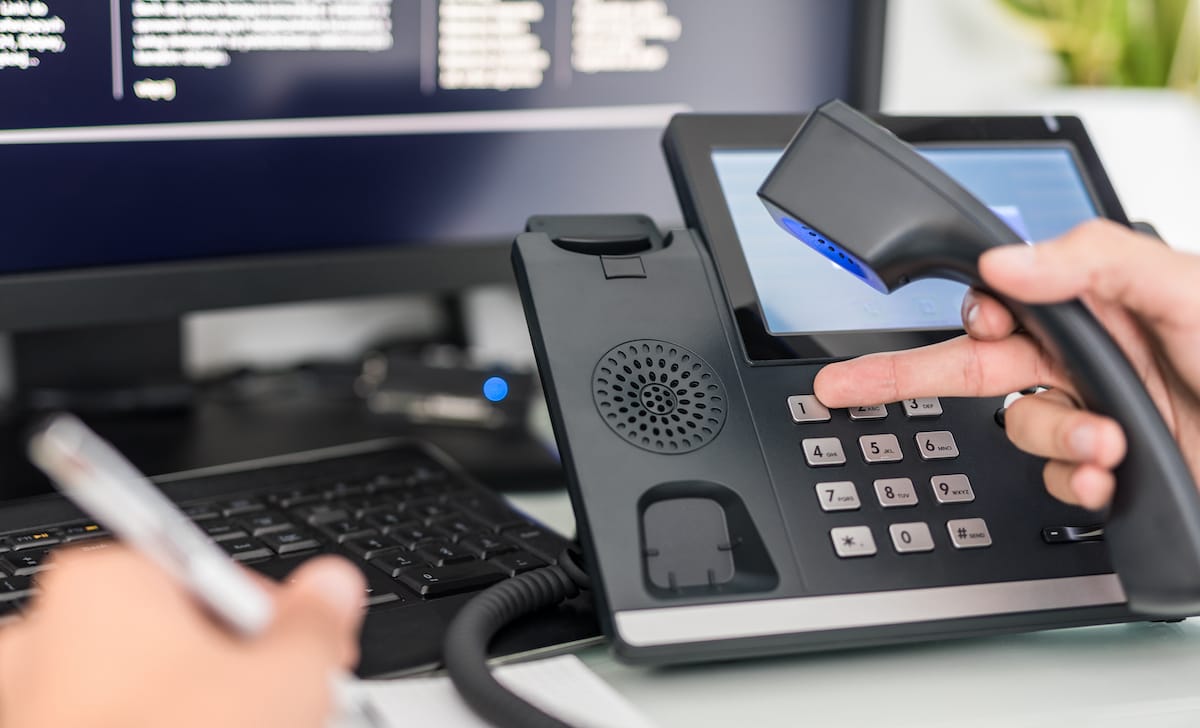
White label IT support services can benefit your businesses’ growth, whether you’re selling your own products/ or want to add IT support services to your current white labelled products you offer. White label IT solutions allows you to scale at a pace that suits you and has no outlay financially until you are making money yourselves.
What is white label IT support?
White label IT support allows you to offer your end users IT services with the benefit of you not needing to hire any staff members as the services are carried out under your identity and performed as if they were in-house IT staff.
White label IT support services come in various forms:
White label IT help desk – With this option, your white label partner provides technical support to your end users. They answer questions, troubleshoot problems, and offer general help to your IT customers via phone, email or remote it services.
On-site IT support – With on-site services, IT engineers go to your client’s location to fix IT problems, maintain systems, or replace hardware.
You can increase the scope of your services without hiring more people by white labelling IT solutions. White labelling is something to consider if you lack the resources to provide effective IT solutions, either because you’re a small business or because it is growing quickly. Here is why white labelling is worthing looking into in these circumstances:
The more complicated issues affecting your end customers might be better handled by a third party with a diversified team of experts.
You can provide service around-the-clock, which can be a significant selling factor for your company.
White labelling is cost-effective. Without having to hire a large workforce or worry about managing or training your IT staff, your business can make use of experienced IT professionals.
Is white labelling IT profitable?
This is the big one! Is White Labelling even going to have a chance of making your business profitable?
Yes!
With white label IT support you get to offer our services at a set fee and in return you choose what to charge your clients! On average, our white label IT partners make around 50% – 70% profit on each end user.
The key? Finding an IT partner you can trust
Finding the right white label IT partner is crucial to any partnership working. Both parties need to work in unison and ensure they are on the same page at all times.
When you partner with ATS Connection, you can select the type of partnership that is best for your business.
You can exert as much control as you like on the procedure, branding, and client experience thanks to our flexibility.
Find out more on our white labelling IT solutions here or contact us on 01903 255 159.
Millions of homes and businesses now have access to fast fibre optic internet via the BT Openreach network, Virgin Media network. If you can get fibre it’s a great choice, providing fast (sometimes gigabit) speeds at an affordable price.
But that’s if you can get it. There are still many properties where the only option for fixed-line broadband is ADSL, which can be very slow depending on the condition of the line and distance from the exchange. This is a particular problem for rural areas, but there are still urban locations that lack modern broadband infrastructure.
If you’re in a situation where internet access is very sluggish, you might be looking for alternatives, and one potential contender is 4G/5G mobile broadband.
Understanding how Mobile Broadband works and the benefits of it can make a big difference when considering what broadband is right for you. There are a few confusions around Mobile Broadband so lets start with the basics and go from there. Mobile Broadband has two variations to it:
Portable MiFi – devices which allows you to put a SIM card into the device and allows you to take it wherever you go and use it as you see fit. Be that on the train, on a plane or even in cafe with no WiFi. As long as your device has a connection to the mobile network you have chosen (most networks offer this) you will have a connection to the internet.
4G/5G Broadband router – These are best used at a static location such as an office or at home. Using this method, you are almost having the same set up as traditional fibre broadband, just with a few extra components (discussed below).
How does mobile broadband work?
Mobile broadband works very much like traditional broadband, with a main router which produces internet connection. So, what is the difference? The main difference comes from how they produce an internet connection.
Fibre broadband gets it’s connection from a copper wire which comes from a cabinet in your local area and ran to your house, which then connects into your router and produces internet.
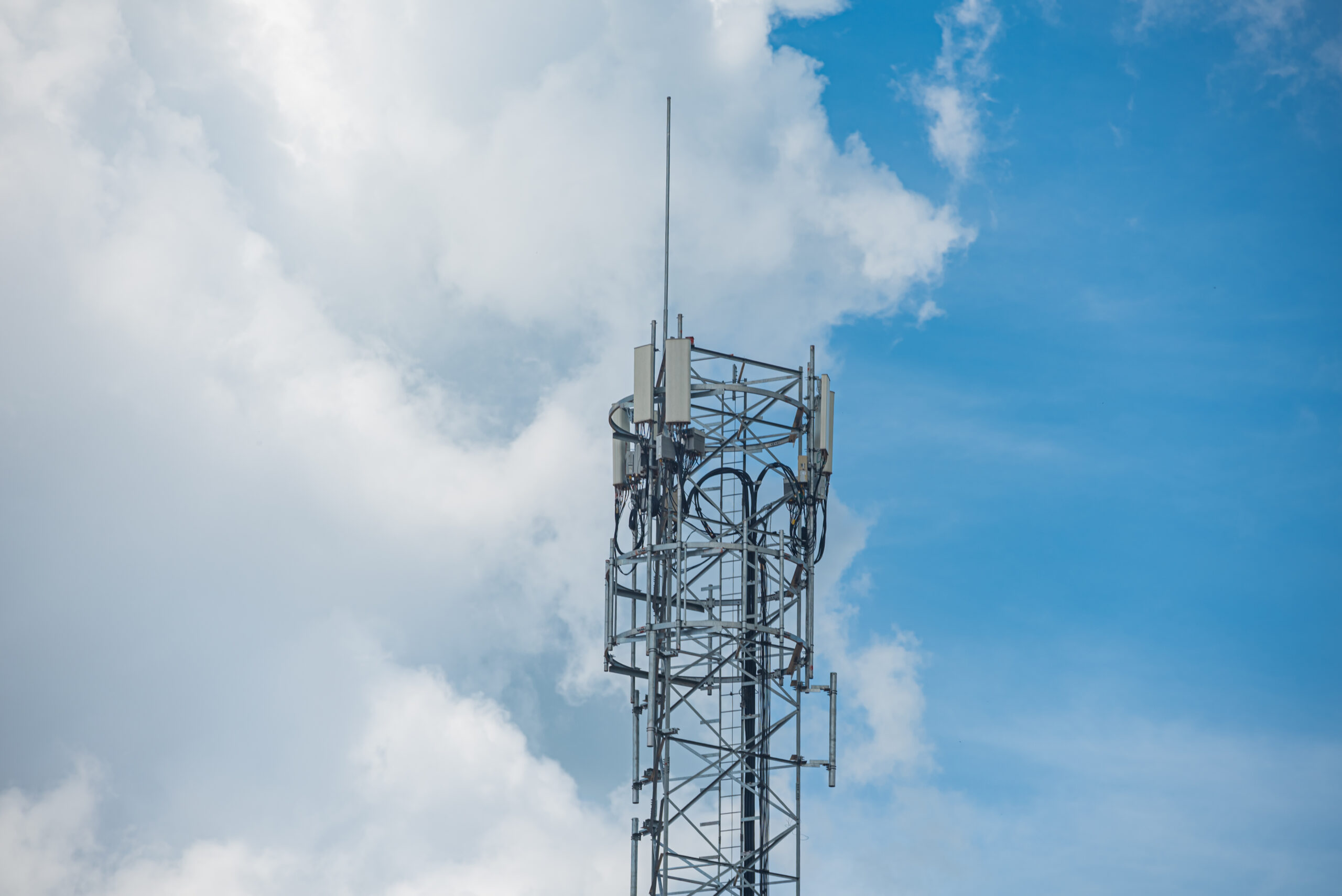
Mobile broadband generates internet via a mobile network SIM card. These are identical to mobile SIMs that you use in your mobile device but have slight differences in how they function. Mobile broadband SIM cards are designed to have multiple devices running on the SIM without crashing and causing issues. Instead of having a copper wire running to your house, mobile broadband generates its connection via antennas attached to the back of your router. In most cases though, it is more beneficial to purchase an exterior antenna, install it to a high point off the property and running an antenna extension wire which goest into the back of the router. Why? Because we are then putting the antenna (which is the component which receives the signal) at a higher vantage point to pick up a much stronger signal.
Ultimately the choice between standard fibre broadband or mobile broadband will come down to your needs, location and demands.
Who can benefit from it?
Most buildings could benefit from mobile broadband, whether they use it as a back up to their current fibre broadband so if that goes down the 4G/5G network kicks in, meaning no down time.
Over the last year or so with working from home being very common for most, they have found that their fibre broadband is not quick or reliable enough for their needs. So this has seen a huge demand for mobile broadband at homes so home works can cope with their work loads.
Those living in a rural area can also benefit from mobile broadband. We have recently installed mobile broadband who was only seeing 3mbps with fibre broadband and is now seeing 35mbps on average!
What are the main benefits?
If broadband options in your area are poor, but your mobile signal is strong, mobile broadband can be a real lifeline.
In some areas, 4G speeds can be higher than those of the local fixed broadband. It’s a solution you’ll often see in very rural areas that fixed broadband lines struggle to reach.
Mobile broadband is also a great low-cost solution for a temporary problem, perhaps if you’ve just moved home and the broadband is taking time to get connected. Even a week without being connected could be frustrating for the whole family.
With people working from home at the moment, and possibly far more so in the future, mobile broadband could be a solution to having your own connection for work, keeping the fixed broadband for the rest of the family to use.
It’s a great way of getting broadband (or higher download speeds, or a more reliable connection) in areas where a fixed line is a bit iffy or difficult to reach.
There’s no need for line rental. All you need is a SIM and a compatible device.
Mobile broadband plans are usually a lot more flexible.
In some areas, 4G speeds can be higher than those of the local fixed broadband.
Perfect for businesses or homes in rural areas.
“Mobile broadband has massively increased our broadband speed, making it much easier to work from home.”
How can you get started with mobile broadband?
Getting started is easy, at ATS Connection we specialise in all aspects of broadband and are reinventing how mobile broadband works. Being specialists in mobile broadband we can advise on the best set up you need for your property, install the necessary hardware and supply mobile broadband SIM cards.
So if you are feeling positive that mobile broadband could be what you need, get in contact with us today and find out more by emailing us on info@atsconnection.co.uk or by calling 01903 255 159.
VoIP stands for Voice over Internet Protocol and is nearly identical in operation to a traditional PBX, but rather than using onsite hardware, calls are routed via the internet. It’s ideal for supporting your remote or hybrid workforce, where staff can take calls as if they were sat at their desk in the office. All without costly call forwarding to mobile phones.
Technology has come a long way in the last few years but the needs of businesses have come a long way too. Needing to stay connected to colleagues and consumers at all times wherever you may be in the world, the ability to offer a respectful customer service and to build your businesses up are all ways in which the demands of a business has increased.
How does VoIP work?
To put it simply, instead of having phone lines and wires VoIP replaces them with an internet connection. Converting your voice into data when you speak and converting back to voice on the receiving end, crystal clear with no delay.
Okay, so we know how it works, but how well does it work? VoIP has a 99% uptime and if the small chance of some downtime, your mobile phone app will still allow you to make and receive calls. To top this off, VoIP problems can be fixed remotely within a matter of minutes meaning no expensive call out charges for an engineer to attend the site, getting you back running as usual in no time.
Ultimately the choice between VoIP or onsite will come down to your business needs, but in almost every case, hosted VoIP will be a good fit. Here’s why:
Lower cost per call
VoIP is best known for how cheap it is to make a call. Those low costs are due to the fact that VoIP uses your existing internet connection. This goes for international calls as well as domestic. The only new charge you have to think about is the monthly price of the hosted VoIP service you use, your team members are free to make as many calls as they want to, to each other. Compare this to traditional landlines that require hardware like wires, installation and expensive phone bills!
Work from anywhere
With hybrid working expected to become the new normal for working practices once ‘stay at home’ advice is relaxed, businesses need staff to be able to communicate wherever they are located.
A phone solution like VoIP will likely come with an app that allows you to make calls on your mobile phone, laptop, and even tablet. This means you can work from anywhere with an internet connection. That way, even if you cannot see colleagues and clients in person, your team can operate at full capacity and productivity levels, even if you’re not physically together. And in many cases team members will be able to keep a single number, regardless of travel or moving from one workspace to another, easy!
Scale it up as you grow
The number of people in your business can go up or down, but scaling up or down accordingly isn’t that easy with a regular telephone system. You have to purchase a handset or a dedicated physical line, which gets expensive. This often results in the need to use clumsy workarounds, like sharing phone sets between users.
With VoIP, scalability is not only easily available, but is also good for keeping your costs low. All you have to do is ask your service provider to add more lines when your team is increasing or remove a line when someone moves on. At any given point of time, you’ll only be paying for what you are currently using.
In other words, VoIP systems can grow comfortably alongside your business, no matter what your size.
“VoIP has transformed the way we can stay connected with out clients, anywhere at anytime.”
Packed with features
Calling is more fun with VoIP phone systems, because these phone systems are often accompanied by a variety of attractive features. Call waiting, call transferring, voice recognition, call forwarding, voicemail, caller ID, call blocking, automatic call distribution, etc. are just some of the many features that you may get to choose from, in your hosted VoIP service.
VoIP systems are feature-rich solutions that enable employees to operate as if they were in the office, even when they’re not. You can send voicemails to instant messaging or emails if the intended recipient isn’t available at the moment. It’s easy for organisations to centralise VoIP communication for better coordination. Other features include mobile integration, auto attendant, advanced call routing, conferencing, and call recording.
Integration with other softwares
Given the fact that VoIP is a technology based on the Internet, its integration with your normal business apps and software can be easily achieved.
You could combine VoIP with your email system, and be able to place calls through the email system itself or even with your CRM system, that way you can merge call records of a customer into the customer’s profile.
VoIP also works well with Microsoft Teams so that users can make and receive regular telephone calls either with their Teams app or with physical telephones.
You can schedule online meetings, chat to your co-workers and communicate easily between staff and customers. There are options to create a private or group chat whilst sharing files.
Increase productivity
The way VoIP works, the features it contains and the user friendliness of them allows for staff to become much more productive. Providing staff the ability to host virtual meetings, conduct international phone conferences at a small cost, attach important documents, share significant data through video conferencing and communicating with colleagues on a private chat software.
In recent years VoIP has really taken off quite significantly, especially in terms of voice clarity to the point that it can be clearer than your traditional phone line conversations. When VoIP first came to the market it was in need of some improvement: distorted calls, dropped calls and lagging transmissions to name a few. This is no longer the case and VoIP has now become one of the most popular ways of communication for businesses of all shapes and sizes.
Reliable and ready for ISDN switch off
In 2025, the UK’s ISDN network will be turned off. This means traditional telephone lines are being switched off, and more businesses will need to move to VoIP, so now is the time to set up your business with a digital phone line.
For a more in-depth overview about the 2025 switch off, what it means for your business, and whether to make the switch earlier with a possible cost saving, read our ISDN switch off page.
To find out more about how VoIP can transform your business, speak to one of our experts, contact us here.
You’ve probably heard the term 5G a lot more lately – it’s one of those phrases that has got the tech world buzzing, with many bold claims about the future being made by mobile networks, device manufacturers and tech journalists alike.
But what is 5G? And realistically, for the average small or medium business owner, what effect will it have?
To understand this, let’s remind ourselves of a little history. The 5 in 5G simply refers to this being the fifth generation of mobile networks. The first generation – remember playing Snake on those old Nokia phones? – let users make calls and not much else. The 1990s didn’t just bring us the Spice Girls and Britpop – they also gave us the second generation, complete with the ability to communicate by Short Message Service (SMS) – better known as texting.
At the turn of the 21st century, 3G enabled mobile data, bringing the internet, maps, and email to our phones for the first time. It was such an important technology that whole devices were named after it – Apple’s iPhone 3G among them. Finally – for now – 4G built on that use of data, giving us faster music streaming, video calls and more practical email and business applications on the go.
So what about 5G – that just means more speed, right? Well… yes and no. Speed is a factor but there is far more to it than that. The most exciting benefits are 5G’s portability, and its low latency – simply put, a shorter delay between a signal being sent and received.
The first of those benefits – portability – comes because 5G doesn’t need to be delivered through large mobile masts. It operates on much higher radio frequencies delivered by smaller access points, similar to WiFi networks. In urban areas we are likely to see these points on lampposts, billboards, and anywhere a network operator can cost-effectively install one. This means that current ‘blackspots’ and remote places – even those where even 4G isn’t available – could see much better connectivity on 5G.
The second benefit – low latency – will accelerate the growth of the Internet of Things (IoT) – this is where smart devices talk to each other over the network. In the consumer world, this has been referred to in terms of driverless cars and fridges that order milk when it runs out, but the business applications are more exciting than that.
Imagine, for example, turning up to a meeting with colleagues and partners from around the world through augmented reality, with some of the attendees there as holograms. Or a fleet of mobile plumbers in smart cars which can predict traffic patterns and take the most efficient routes from job to job. Or buildings fitted with smart sensors that can analyse the movement patterns of staff throughout the day – not only adjusting heating and lighting depending on where people are, but also using artificial intelligence to predict which rooms and facilities will be needed in an a hour, or two hours, or tomorrow. Cupboards that automatically order stationery, coffee machines that have a cuppa ready for every member of staff before the morning meeting, lights that automatically adapt to reduce eye strain at different times of the day, real time tracking of lone employees out at night and a host of applications nobody will have even thought of yet will be possible to make working life easier, more efficient and more enjoyable.
In the short term, businesses will certainly be able to enjoy faster, higher quality video conferencing, which, as anyone who has ever sat through a Skype business meeting or a Google Hangout knows, currently isn’t always an enjoyable or seamless experience. 5G could also encourage more remote working, with better quality connectivity, improving the ‘virtual workplace’ and supporting the movement towards more flexible working patterns – and much, much more.
Let’s not get ahead of ourselves though – however exciting they seem, truly connected buildings and Star Trek-style hologram meetings are still a long way off. Some companies which are renewing device contracts in the immediate future may want to consider becoming early adopters of the first 5G devices so they are ready for the changes that will come during the lifetime of those devices. Others may want to wait for more 5G-enabled technology to become available – for example, while Samsung has already unveiled its first 5G handsets, Apple has yet to reveal its plans.
It’s also unlikely we will see all regions in the UK benefiting from 5G for some years – so the impact on business will be slower in some areas than others. Aside from some localised tests, the rollout in the UK isn’t expected to begin until 2020, with full UK coverage coming much later. There will be no fanfare, no overnight switch-on – this is an evolution rather than a revolution. The best description we have heard is that adoption of 5G will be a “trickle followed by a rush”.
What’s important, though, is that businesses recognise the potential of this new technology and start to think about a road map for the next five years or so. At Onecom we will be starting and maintaining conversations with our customers about their individual needs and potential – and watch this space for more thoughts on how the 5G future will unfold.
Traditionally, Integrated service digital network (ISDN) technology allowed inbound and outbound voice calls through a ‘digital’ line – through the internet. But SIP trunking is now replacing ISDN services, which means ISDN will slowly be phased out over the next 5 years. Why? Because it’s better technology. Think 5G replacing 4G, which replaced 3G in turn. Gradually, they are then phased out as new technology comes along. Not only is it better technology, it’s also cheaper, more flexible and can help business future-proof their telecommunications systems.
What is ISDN?
ISDN stands for integrated service digital network. It originally appeared back in the 80’s but is still widely used in businesses. It became popular due to the fact that it allowed the opportunity to transmit both voice and data over the same line.
ISDN is a digital line that runs through copper wiring. It was a lot faster than traditional analogue lines and could be used for data as well as carrying voice calls. The main issue with ISDN is that it relies on physical infrastructure, the copper lines, which can be costly to maintain. It also requires an additional private telephone network that is used within the company (also known as a private branch exchange or PBX).
In a nutshell, ISDN takes up space, is costly to maintain and cannot easily be fixed when things break.
Replacing ISDN with SIP trunking
Session Internet Protocol (SIP) trunking is the next-in-line future-ready solution to replace ISDN. It’s still a digital connection, ensuring calls are transmitted via the internet. However, it connects the PBX to the network via broadband, Ethernet or a private circuit. It enables you to make calls via the internet. (NB: SIP is also known as VoIP, which struggled to take off due to early signal issues and problems. Therefore, SIP came along as technology advanced, enabling more reliable and scalable communication options for businesses.)
The trunking part? Well, that is a tech-jargon for a system which provides network access to many people by sharing a set of lines. Think of a tree trunk with many branches running off it or a network with a central hub. A ‘trunk’ is one communications channel between one point and another, typically one being the central hub.
SIP enables businesses to mange their communications more easily and have a more reliable solution that is flexible to their business needs.
Why does my business need SIP?
The main reason you should switch to SIP, is because ISDN is on its way out. BT completely plan to phase out ISDN by 2025, with Internet Protocol (IP) calling seen as a much-preferred alternative. We highly, recommend getting yourselves into the modern world and upgrading your phone lines. But don’t just take our word for it. Here’s more reasons why you should be looking at moving from ISDN to SIP.
You’ll save money
One of the major benefits of upgrading to SIP is that you can see unprecedented savings on your call costs. SIP means running your calls via the internet, which takes out the need for physical infrastructure and therefore, maintenance. It is suggested that business can save up to 50% on their business calls on average.
What’s more, as your line is run through the internet, providers often give you inclusive minutes included within your monthly charge. You can make even more savings, the larger your business too.
You get flexibility
With SIP adding new lines is really simple – in fact, it can be done in less than a minute. Calls via the internet can help you to meet business demand and control where your calls go easily.
Setting up new offices or working remotely is a lot easier as there’s no need for installing new lines. It also enables a business to keep their existing numbers, even when they move locations.
SIP trunking is scalable, which means it can be grown with your business really easily.
You get more reliability
When traditional ISDN connections go down, it can be timely and difficult to fix. Your business can be out of action for hours, if not days. Business continuity is reliant upon maintain connections.
With SIP trunking you get a new level of resilience. Your calls can be diverted to a different line or redirected to another office. It also enables calls to be redirected to mobiles too, which can be great for remote workers or employees out for meetings.
Stepping towards SIP
Switching lines can be met with resistance. Particularly, because traditionally switching can cause disruptions within a business.
However, your switch to SIP can be flexible. You can switch in one move or phase the transition by each site, office or even floor. One of the best benefits is that SIP can actually work alongside ISDN so there’s no need to worry about down time.
In fact, there’s little disturbance to your business activities, if any. Testing and checks can be carried out in a controlled environment too.
With the removal of ISDN there is no good reason to continue using old phone lines. Especially, when you can save money, get more reliability and have calls that can meet your business demand.
For more information about making the transition from ISDN to SIP trunking, contact our team at ATS Connection today on 01903 255 159 today or get in touch.
You may have heard that the UK government is launching Emergency Alerts, expected summer 2021. Here’s an insight into what this means for you.
What will they do?
An Emergency Alert is sent to your phone or tablet to warn you if there’s danger to life nearby. It will also let you know how to stay safe.
Why would you get an alert?
Testing of Emergency Alerts by mobile phone networks
Severe flooding
Fires
Explosions
Terrorist incidents
Public health emergencies
The alerts will only be sent by:
The emergency services
The government
How they work:
Using usual mobile signal (phone masts) every mobile or tablet in range will receive an alert. It is not sent using a phone number and you therefore do not need to supply a number.
If you would like to find out any more information, you can visit the GOV.UK website
With the most recent release of 5G it’s easy to take this incredible technology for granted – do you remember the release of 1G?
We’re going to take you on a trip down memory lane and our journey to 5G…
1G – First Generation Mobile.
Analogue technology: the sound quality was okay but interference was common. Alongside some background noise or hissing sounds such as white noise. Handsets were extremely bulky – which device do you remember?
Reception was pretty poor, but it really did make a difference if you held your phone up to the sky and pointed it in different directions!
SMS and internet was yet to come…
Did you know? when we switched from 1G Analogue to 2G Digital, the networks added white noise to the connection on purpose because people thought the line had gone dead when no-one was speaking.
2G – Second Generation Mobile.
Digital voice calls – a lot clearer than analogue, sounded like you were in the room next door!
SMS (short message service) was introduced, but our phones didn’t have keyboards then, so you had to tap the numbers multiple times to get the letter you wanted. Typing a 160-character text message was very time consuming until the introduction of predictive text in 1995!
Figure this one out – 44-33-555-555-666.
Mobile data was also introduced and was very slow at start, with speeds of just 9.6 kbps. Speeds were improved with the introduction of 2.5G GPRS data (171 kbps) and EDGE (384 kbps = 0.4 Mbps), less than half a meg per second = still slow! The connection types were represented by a G and E on the phone screen next to the signal strength indicator.
Did you know? The first iPhone was launched in late 2007 after the commercial 3G rollout has started, however it was known as iPhone 2G because it was only 2G capable. There was no iPhone 1 or 1G.
3G – Third Generation Mobile.
Same text and voice services but with improved data speeds of 2 Mbps were introduced.
Data speeds improved with HSPA or 3.5G, giving speeds of 14.4Mbps, which is when we start to see the introduction of the Smartphones that can access full internet pages on larger mobile screens and apps!
‘Mobile broadband’ introduced as a data only mobile connection using a standard mobile SIM in a data device (i.e. dongle).
Messaging apps start to take over from traditional SMS – WhatsApp (2009) and iMessage (2011) use data to send messages.
4G – Fourth Generation Mobile.
The 4G network provides data connectivity only – voice and SMS is still available via 2G/3G connection.
Data speeds increase again to around 300Mbps (realistic speeds were a lot lower, but still fast enough for standard smartphone usage).
In 2014, Smartphone connections to the internet exceed PCs. Voice calls using a data connection, or Voice over IP (VoIP) is now common – think Facetime, WhatsApp audio, etc.
5G – Fifth Generation Mobile
For the Connected World!
This is not a smartphone technology. It was designed to address the issues with current 3G/4G networks in order to advance mobile technology to another level.
Key to the new connected world is not just speed, but capacity, latency, and battery efficiency.
“Many think 5G is simply the next step up from 4G – but it’s much more than just an upgrade. 5G is set to change the way we work and will kick-start the 4th Industrial Revolution.”
Speeds now reach 1Gbps (realistic 300Mbps on smartphone).
With over one thousand times the data capacity of 4G, 5G will be able to:
Handle thousands of Internet of Things (IoT) devices, compared to just over one hundred on 4G
Provide ten times higher data speeds than 4G
Connect one million personal devices per square kilometre, compared to two hundred on 4G
Provide ultra-reliable low latency, five times better than 4G
And enable battery life of up to ten years on machine-type devices
Analysts believe that 5G will move cellular connectivity to a completely new level, where all devices can communicate and share information easily. Some go as far to say that 5G will achieve the landmark of being considered a General Purpose Technology, a designation given to technologies that change the world. Other GPTs include the printing press, electricity, automobiles, and the internet, putting this potential classification into proper context.
The UK’s Brexit deal with the EU does not rule out the re-introduction of roaming charges for using your mobile phone in the EU. Although the UK’s mobile operators have indicated that they will not reintroduce charges, we recommend that you keep up-to-date with the latest roaming charges and advise your colleagues to check before they travel.
Can I use my mobile in the EU?
Since 2017, UK consumers have, within reason, been able to use their inclusive minutes, texts and data when travelling in the EU without incurring additional charges. The same is true for people from EU countries visiting the UK. Before the roaming rules changed, using a mobile phone in Europe could have been costly, with cases of people returning from trips to find bills for hundreds or even thousands of pounds waiting for them.
Will roaming charges return?
The UK’s trade deal with the EU, which has now come into force, does not prevent the re-introduction of additional roaming charges in Europe. It says that both sides will encourage operators to have “transparent and reasonable rates” for roaming. That means that mobile operators will be able to implement roaming charges if they want to. The government’s guidance says: “Check with your phone operator to find out about any roaming charges you might get from 1 January 2021.”
What are mobile companies planning?
Now that we have left the EU, the charges now depend on agreements between UK operators and their counterparts in EU countries. While they may have such deals in place to prevent charges increasing straight away at the start of 2021, there is no guarantee that they will be able to maintain them indefinitely. The four main operators in the UK declined to comment on the specifics of the commercial deals they have done with other operators, but said they did not plan to reintroduce roaming charges.
O2 said: “We’re committed to providing our customers with great connectivity and value when they travel outside the UK. We currently have no plans to change our roamingservices across Europe.”
Vodafone said it had no plans to reintroduce roaming charges.
EE said: “Our customers enjoy inclusive roaming in Europe and beyond, and we don’t have any plans to change this based on the Brexit outcome. So our customers going on holiday and travelling in the EU will continue to enjoy inclusive roaming.”
Three said it “already offers roaming at no extra cost for its customers in over 70 destinations including the US, Australia and New Zealand. We will retain this great customer benefit regardless of Brexit negotiations.”