The Big Switch Off: What the January 2027 Landline Shutdown Means for Your Business

What Is the Big Switch Off?

The Big Switch Off is the permanent shutdown of the UK’s analogue telephone network, the Public Switched Telephone Network (PSTN), on 31 January 2027.

The PSTN is the copper-wire network that has carried Britain’s phone calls for over a century. Every traditional landline, every fax machine, and every ISDN phone system runs across it. So do many things you might not expect: card payment terminals, fire and burglar alarms, lift emergency lines, CCTV systems and door entry panels.

When the PSTN goes, everything that depends on it stops working. Openreach has confirmed the deadline is fixed and will not move again. Any business still relying on analogue lines needs a migration plan, and with the deadline now under seven months away, that plan needs to happen soon. For the full step-by-step guide, see our PSTN and landline switch-off overview, or get a quote to start your migration.

When Is the Switch Off Happening?

The full PSTN shutdown completes on 31 January 2027, but for many businesses the practical deadline is earlier:

  • September 2023: Openreach stopped selling new analogue lines and ISDN nationwide (the “stop sell”)
  • May 2024: The original December 2025 deadline was extended to January 2027 to allow safe migration of vulnerable users
  • Throughout 2025-2026: Local exchanges are being migrated in phases, so some areas lose analogue service before the national deadline
  • 1 January 2026: Legacy line rental moved to 90-day rolling contracts
  • During 2026: Wholesale prices for legacy lines rise sharply in three stages (more on this below)
  • 31 January 2027: The PSTN is switched off permanently

Openreach has been clear the deadline cannot slip again. Their view is that the ageing copper network is now a bigger risk than the migration itself: major incidents on the PSTN rose 45% in a single year, and a single incident can knock out 500 or more lines at once.

Some communications providers set their own earlier cut-off dates, so don’t assume you have until January 2027. If your provider hasn’t contacted you about migration, that’s a red flag in itself.

Why Is the PSTN Being Switched Off?

The short answer: the network is over 100 years old and falling apart.

The copper PSTN was engineered for a world of rotary dial phones. The parts to maintain it are increasingly difficult to source, the engineers who know how to fix it are retiring, and the failure rate is climbing every year. According to Openreach, the analogue network is now obsolete, harder to maintain, and significantly more expensive to run.

Meanwhile, the replacement, digital voice services running over broadband, is cheaper to operate, more reliable, and far more capable. The UK is following the same path as most developed countries: the Netherlands, Estonia and others have already completed their analogue switch-offs.

This is part of a wider upgrade. Openreach is investing £15 billion in full fibre broadband, and retiring the copper network is a key part of moving the country onto modern digital infrastructure.

What Happens If You Do Nothing?

This is the question that matters most, and the answer is blunt.

If you take no action before your line is migrated or switched off, your provider may default you onto a basic emergency-only fallback service. That means your number can reach 999, and nothing else. No inbound calls from customers. No outbound calls to suppliers. Your business number effectively goes dark.

Before that happens, you’ll be paying steadily more for a service with a confirmed shutdown date, because Openreach is deliberately raising legacy line prices to push the final migrations through.

And it’s not gradual. When your exchange is migrated, analogue service ends. Businesses that leave it until the final weeks risk joining a last-minute rush, with every provider’s installation calendar full, hardware in short supply, and no room for the porting process to run smoothly.

Roughly 2.8 million lines were still on the PSTN at the start of 2026, over half a million of them serving business premises. That’s a lot of businesses competing for engineer availability in the final months. Moving early isn’t just safer, it’s the only way to guarantee a smooth transition on your own timetable.

It’s Not Just Phones: What Else Is Affected

The most dangerous misconception about the Big Switch Off is that it only affects desk phones. In reality, decades of equipment has been quietly wired into analogue lines:

  • Card payment terminals – older PDQ machines that dial out over a phone line
  • Fire and intruder alarms – many alarm panels signal to monitoring centres via PSTN
  • Lift emergency lines – over 12,000 lift lines were still on copper at the start of 2026
  • CCTV systems – legacy setups using phone lines for remote monitoring
  • Door entry and gate systems – intercoms that dial a phone number
  • Fax machines – still common in some industries
  • Franking machines – older models connect via analogue line
  • ISDN phone systems – ISDN2 and ISDN30 run on the same copper network and die with it
  • ADSL and FTTC broadband – older broadband products delivered over the copper network are being withdrawn too

For sectors like construction, hospitality and property management, the alarm, lift and payment terminal issue is often bigger than the phones themselves. A hotel with an analogue fire alarm line or a property firm managing buildings with copper lift lines has a compliance and safety problem, not just a telecoms one.

The fix is an audit: walk through everything in your premises that plugs into a phone socket, and check with your suppliers whether each device has a digital-ready replacement or upgrade path.

Legacy Line Prices Are Rising Right Now

If the deadline alone isn’t persuasive, the pricing should be. Openreach has confirmed a tiered set of wholesale price increases on legacy line rental designed to make staying on copper uneconomic:

DateWholesale price increase
1 April 2026+20%
1 July 2026+40%
1 October 2026Further +40%

By this autumn, the cost of a legacy analogue line will have effectively doubled compared to the start of the year. In many cases it’s already cheaper to be on a modern digital service than to keep paying for the old line.

In other words: doing nothing isn’t the cheap option. It’s the expensive option with a hard stop at the end.

What Replaces Your Landline?

The replacement for analogue phone lines is VoIP, Voice over Internet Protocol. Instead of your calls travelling down a dedicated copper wire, they travel over your broadband connection as data.

For a typical small business, a modern hosted VoIP system means:

  • Desk phones that plug into your network (or softphone apps on computers and mobiles)
  • A cloud phone system managed through a web portal instead of a box on the wall
  • Your existing numbers, ported across so nothing changes for your customers
  • Calls over broadband, ideally full fibre (FTTP) or SoGEA where fibre isn’t available yet

At ATS Connection we provide business VoIP built on the Xelion platform, a fully featured cloud phone system that handles call routing, voicemail-to-email, mobile apps, call recording and hunt groups as standard. It’s the same system we use ourselves, and we’ve migrated businesses across West Sussex from ageing analogue and ISDN setups onto it, including multi-site companies and businesses with complex call-handling needs.

If your broadband also runs on the old copper network (ADSL or FTTC), the switch is the right moment to upgrade connectivity at the same time. One project, one provider, everything future-proofed together.

The Benefits of Switching to VoIP

The Big Switch Off is forcing the move, but for most businesses VoIP is a genuine upgrade rather than a like-for-like swap:

Lower running costs. No line rental on copper pairs, cheaper call rates, and free calls between sites and colleagues. Most businesses save money compared to their old analogue or ISDN bills.

Work from anywhere. Your business number rings on your desk phone, your laptop and your mobile. Staff working from home or on site answer calls exactly as if they were in the office, a game-changer for trades, construction and field-based teams.

Scale up and down instantly. Adding a new user is a few clicks, not an engineer visit and a new line installation. Seasonal businesses can add lines for busy periods and remove them after.

Professional call handling. Auto-attendants (“press 1 for sales…”), hunt groups, call queues, out-of-hours routing and voicemail-to-email. Features that used to require an expensive on-premise phone system come as standard.

Business continuityIf your office loses power or internet, calls automatically divert to mobiles. With an analogue line, a fault means silence until an engineer arrives.

Call insights. See call volumes, missed calls and response times. Useful data you simply never had with analogue lines.

Will You Lose Your Phone Number?

No. This is the most common worry we hear, and it’s the easiest to put to rest.

Your existing numbers, including long-standing local numbers your customers have known for years, can be ported to your new VoIP service. The porting process is handled between providers and typically takes 10-15 working days. There’s no need to reprint stationery, update signage or change your website.

The key is to never cancel your old line before the port completes. Cancelling first can mean losing the number permanently. A competent provider will manage the sequencing for you so there’s no gap in service: your new system goes live, the number ports across, and only then does the old line get ceased.

How to Prepare: A Step-by-Step Checklist

Here’s the practical path from “still on analogue” to “sorted”:

1. Audit everything connected to a phone line. Phones, alarms, lifts, card machines, door entry, fax, CCTV. List every device and every line. This is the step most businesses skip, and it’s where the nasty surprises hide.

2. Check your broadband. VoIP needs a reliable internet connection. If you’re on ADSL or FTTC, plan the broadband upgrade alongside the phone migration. Check full fibre availability for your postcode.

3. Count your users and map your call flows. Who needs a handset? Who’s fine with an app? How should incoming calls route: reception first, then a hunt group? Out-of-hours to a mobile? This shapes the system design.

4. Choose your VoIP provider and system. Look for business-grade platforms, UK support, and a provider who handles number porting and installation end to end.

5. Deal with the non-phone equipment. Contact your alarm company, lift maintainer and payment provider about digital-ready upgrades. Most have well-established migration paths now, but lead times vary.

6. Schedule the migration. Ideally months before the deadline, not weeks. Number porting, hardware delivery and any broadband installation all have lead times that compound if left late.

7. Test everything, then cease the old lines. Only cancel legacy lines once numbers have ported and every dependent device is confirmed working on its new connection.

If that list feels like a lot, that’s what we’re here for. We run this entire process for clients as a single managed project, from audit through to the final line cease.

How Long Does Switching Take?

For a straightforward small business, a handful of users, decent broadband already in place, the switch can be completed in 2-4 weeks, most of which is waiting for number porting.

Add broadband upgrades, multiple sites, or dependent equipment like alarms and lift lines, and a realistic timeline is 1-3 months to do everything properly without disruption.

That’s exactly why the time to start is now, not December. Businesses that begin the process in the second half of 2026 will be competing with hundreds of thousands of others for engineer appointments, hardware and porting slots. Starting now means you choose the timetable; starting late means the timetable chooses you.

Frequently Asked Questions

What is the Big Switch Off in the UK?

The Big Switch Off is the permanent retirement of the UK’s analogue Public Switched Telephone Network (PSTN) on 31 January 2027. All traditional landlines, ISDN phone systems and services running over the copper phone network will stop working and must be replaced with digital (VoIP) alternatives.

When exactly will my landline stop working?

The national deadline is 31 January 2027, but exchanges are being migrated in phases and some providers have set earlier dates. Your line could be affected before the final deadline, so check with your provider now rather than assuming you have until 2027.

Will the PSTN switch off be delayed again?

No. The deadline was moved once, from December 2025 to January 2027, to protect vulnerable users during migration. Openreach has confirmed that work is complete and the January 2027 date is fixed.

Does the switch off affect broadband too?

Yes, partly. ADSL and FTTC broadband run over the same copper network and are being withdrawn alongside the PSTN. Full fibre (FTTP) and SoGEA connections are unaffected; they’re the replacements.

Can I keep my business phone number when I switch to VoIP?

Yes. Numbers are ported to your new VoIP provider, typically within 10-15 working days. Don’t cancel your old line until the port has completed, or you risk losing the number.

What happens to my card machine and alarm system?

Any device that connects via an analogue phone line, such as card terminals, fire and intruder alarms, lift lines and door entry systems, needs a digital upgrade before the switch off. Contact each supplier about their migration path, and do it early as lead times vary.

Is VoIP more expensive than a landline?

Usually the opposite. Most businesses pay less per user per month for VoIP than they did in line rental and call charges, and legacy line prices are rising steeply through 2026 anyway. VoIP also removes the cost of maintaining an on-premise phone system.

Do I need new phone handsets for VoIP?

Not necessarily. Modern VoIP systems work with dedicated IP desk phones, softphone apps on computers, and mobile apps. Some existing handsets can be reused with adapters, though for most businesses new IP handsets or apps are the cleaner option.

What if my internet goes down? Will I lose my phones?

Calls can automatically divert to mobiles or another site if your connection fails, which is more resilient than analogue ever was: a copper line fault meant no calls at all until an engineer fixed it. A well-designed VoIP setup includes failover from day one.

What should businesses in West Sussex do first?

Start with an audit of every line and every device connected to one. If you’d rather not do that yourself, we offer a free switch-off readiness check for businesses across West Sussex. We’ll identify what’s affected and map out the migration for you.

Get Switched Before the Deadline

The Big Switch Off isn’t a maybe. It’s a fixed deadline with rising costs for anyone who waits. The businesses that come out of it best are the ones treating it as an opportunity: modern phones, better call handling, lower bills and a system that works wherever your team does.

At ATS Connection we’ve been moving West Sussex businesses onto our Xelion-based VoIP platform ahead of the deadline, handling the audit, the number porting, the hardware and the broadband, all as one managed project. We help businesses across Chichester and West Sussex plan the move well ahead of the deadline.

Book your free Big Switch Off readiness check:

We offer:

Don’t wait for the last-minute rush. Get ahead of the deadline while there’s still time to do it properly.

Are Landlines Being Phased Out? What to Do Next

Yes. The UK’s traditional landline is being phased out. The old analogue phone network, known as the PSTN, is being switched off and replaced with digital calling that runs over the internet. If you still have a traditional home or business phone line, it will move to a digital service before the network is retired at the end of January 2027.

What is the UK landline switch off?

The UK landline switch off is the retirement of the old analogue phone network, and every home and business still on it will be moved to digital calling before the deadline. The regulator Ofcom has more on the change.

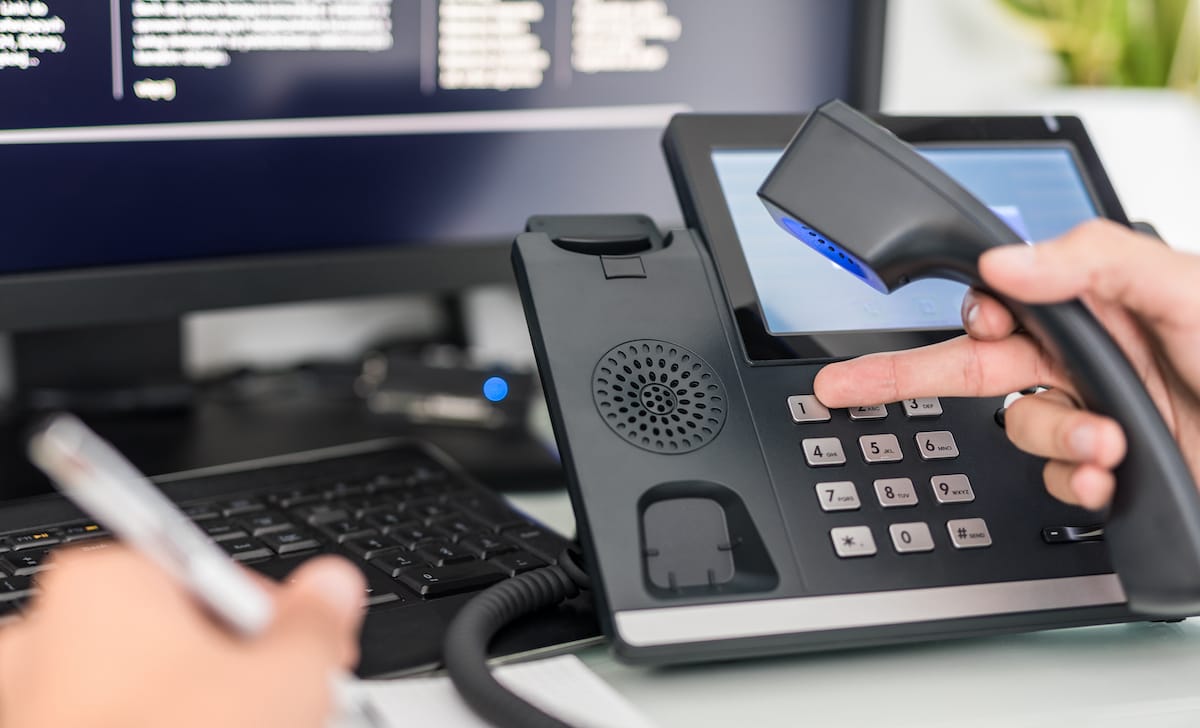
UK landline switch off affecting an office telephone

Here is what that actually means, why it is happening, and the simple steps to make sure your phone, and everything else that quietly relies on your line, keeps working.

Why are landlines being switched off?

The copper based analogue network has carried our calls for well over a century, but it is old, expensive to maintain and increasingly unreliable. Openreach is retiring it and moving everyone to digital voice, where calls travel over a broadband connection instead of copper wires. It is the same shift the mobile and internet worlds made years ago. For the full business detail, see our guide to the PSTN and landline switch-off.

When will my landline stop working?

  • 2023: new analogue phone lines stopped being sold.
  • Now: existing lines are being migrated to digital in a rolling regional programme.
  • End of January 2027: the analogue network is switched off completely.

The final deadline was extended from December 2025 to give people more time to migrate safely, particularly households with vulnerable users or equipment that depends on a phone line. The end result is the same, only the timeline moved.

What it means at home

For most homes the change is simple. Your calls move to digital voice, usually plugged into your broadband router, and in many cases you can keep your existing phone and number. If you have a personal alarm or a telecare pendant, tell your provider, as these need checking before the switch.

What it means for business

Businesses have more to think about, because it is not only desk phones that use a line. Alarms, door entry systems, lift phones, card machines and fax machines can all dial out over analogue lines and may stop working after the switch. The move is also an opportunity: modern VoIP phone systems are cheaper to run and far better for hybrid working than the old lines ever were.

What replaces the landline?

  • Digital voice, or VoIP: your calls run over the internet through a hosted phone system, keeping your numbers and adding features like mobile apps and call recording.
  • Modern broadband: SoGEA broadband and full fibre deliver internet without needing a traditional phone line at all. For homes, our home broadband options do the same.

What you should do now

  • Check what depends on your line, including alarms, lifts and card machines.
  • Plan your move to digital voice and confirm you can keep your number.
  • Make sure your broadband is up to the job, upgrading to SoGEA or full fibre if needed.
  • Do not wait for the deadline, as migrating early avoids any risk of being cut off.

How ATS Connection can help

We help homes and businesses across West Sussex move off the old network smoothly. We check what you have, recommend the right digital phone and broadband setup, port your numbers and manage the switch with no loss of service. Get a quote or call us on 01903 255 159.

Frequently asked questions

Are landlines really being phased out in the UK?

Yes. The analogue phone network is being retired and switched off by the end of January 2027, with all lines moving to digital voice delivered over broadband.

Will I lose my phone number?

No. Your existing number can be ported across to the digital service, so you keep it when you move.

Do I need the internet for a digital landline?

Yes. Digital voice runs over a broadband connection, which is why it is worth making sure your broadband is reliable before you switch.

What happens if I do nothing?

When the analogue network is switched off, any service still on it stops working. It is much safer to migrate ahead of the deadline.

Is digital voice more expensive?

Usually it is cheaper, because there is no separate line rental and calls are often included, plus you gain features a traditional line never had.

What is VoIP? A Simple Guide for Businesses

VoIP stands for Voice over Internet Protocol. In plain English, it means making phone calls over the internet instead of a traditional phone line. If you have used WhatsApp calling, Microsoft Teams or FaceTime, you have already used VoIP. Business VoIP takes the same idea and turns it into a full, reliable phone system for your company.

What is VoIP?

So what is VoIP? In short, VoIP means making phone calls over the internet instead of over a traditional phone line, and it is now how most UK businesses make and take their calls. For the technical background there is a helpful overview of Voice over IP.

What is VoIP shown by a VoIP desk phone

With the old analogue network being switched off, VoIP is now how UK businesses make and receive calls. Here is how it works, what it costs you to run, and why it is a big upgrade on a traditional line.

How does VoIP work?

Instead of sending your voice down a copper wire, VoIP converts it into digital data and sends it over your internet connection to a hosted phone system in the cloud. That system handles your calls, your numbers and all the clever features, then connects to the wider phone network so you can still call any landline or mobile. You can use a desk handset, a computer, or a mobile app, and it all works as one system.

The benefits of VoIP for business

  • Lower cost: no line rental, and calls are often included, so most businesses save money.
  • Work anywhere: your office number rings on your laptop or phone whether you are at your desk, at home or on the move.
  • Powerful features: call recording, auto-attendant menus, voicemail to email, hold music, call queues and reporting come as standard.
  • Easy to scale: add or remove users in minutes as your team changes.
  • One system across sites: every office and home worker sits on the same phone system.

VoIP versus a traditional landline

A traditional line ties a number to a physical socket and charges you line rental for the privilege. VoIP frees the number from the wire, so your team can answer the same number from anywhere, and you gain features a copper line could never offer. With the analogue network being switched off, VoIP is also the natural replacement rather than an optional upgrade.

Is VoIP reliable?

Yes, when it is set up properly. Delivered over a solid business broadband connection such as SoGEA or full fibre, modern VoIP is stable and clear, and it comes with failover options so calls can automatically divert to mobiles if your internet ever drops. Reliability comes down to getting the connectivity right underneath it, which is where a good provider earns their keep.

What do you need to get started?

  • A reliable broadband connection.
  • VoIP handsets, or just the app on your computers and mobiles.
  • A hosted phone system, set up with your numbers, menus and users.
  • Your existing numbers ported across so nothing changes for your customers.

If you need new numbers as well, we can help you choose the right ones, including local, national and freephone, on our business phone numbers page.

How ATS Connection can help

We design, install and support VoIP phone systems for businesses across West Sussex, handled end to end. We sort the broadband, port your numbers, set the system up around how your team actually works, and support it afterwards. Get a quote or call 01903 255 159.

Frequently asked questions

What does VoIP stand for?

VoIP stands for Voice over Internet Protocol. It means making phone calls over the internet instead of a traditional analogue phone line.

Is VoIP cheaper than a normal phone line?

For most businesses, yes. There is no separate line rental, calls are often included, and one system covers every user, which usually reduces the overall bill.

Can I keep my existing phone number with VoIP?

Yes. Existing numbers can be ported to a VoIP system, so your customers see no change.

Do I need special phones for VoIP?

Not necessarily. You can use VoIP handsets, or simply an app on your computer or mobile. Many existing phones can also be adapted.

Is VoIP reliable enough for a business?

Yes. Over business grade broadband it is reliable and clear, and it includes failover so calls can divert to mobiles if your connection ever drops.

Phone Systems for Remote and Hybrid Teams

Hybrid working is now normal, but a lot of business phone systems still assume everyone sits at the same desk every day. If your team is split between the office, home and the road, the right phone system keeps you sounding like one joined-up business no matter where anyone is. This guide explains what to look for.

What are remote worker phone systems?

Remote worker phone systems let your team make and take business calls on one number from anywhere, whether that is at home, in the office or on the road. Government home working guidance covers the security side.

Remote worker phone systems used by a person on a headset

Why traditional phone systems struggle with hybrid work

A traditional system ties each extension to a physical handset in the office. When staff work from home, calls get missed, people hand out personal mobile numbers, and you lose the professional front and the call records that matter. It also makes it hard to know who is available. Hybrid teams need a system built around people, not desks.

What a modern remote phone system does

Modern VoIP phone systems run in the cloud, so the same system reaches every person wherever they are working. The key features for hybrid teams are:

  • One number, any device: your office number rings on a desk phone, laptop and mobile app at the same time.
  • Presence and status: see who is available, on a call or away, across the whole team.
  • Call routing: send calls to the right person or team automatically, wherever they are.
  • Voicemail to email: messages land in the inbox so nothing is missed at home.
  • Call recording and reporting: keep the same records and oversight you had in the office.

Keep work and personal separate

One of the biggest wins is that staff no longer use personal mobiles for work. They make and take business calls through the app, so your number is shown, calls are logged, and personal numbers stay private. When someone leaves, the number and history stay with the business.

What you need for reliable remote calling

Remote calling is only as good as the connection behind it. Each location needs decent broadband, and the office benefits from a business grade line such as SoGEA or full fibre. A good setup also includes failover, so if someone’s home internet drops, calls divert automatically to their mobile.

Getting the numbers right

Hybrid teams often want a professional national or local presence rather than a scatter of mobile numbers. We can help you choose and set up the right numbers on our business phone numbers page, and port any existing numbers across.

How ATS Connection can help

We set up cloud phone systems for hybrid and remote teams across West Sussex, so everyone works from one system whether they are in the office or at the kitchen table. We handle the connectivity, the apps, the numbers and the support. Get a quote or call 01903 255 159.

Frequently asked questions

What is the best phone system for remote workers?

A cloud based VoIP system is best, because it reaches staff on a desk phone, laptop or mobile app using the same business number, wherever they are working.

Can staff use their office number from home?

Yes. With a hosted phone system the office number rings on their home device or mobile app, and outbound calls show the business number too.

Do remote workers need to use their personal mobiles?

No. They make and receive business calls through the app, so personal numbers stay private and every call is still logged by the business.

What internet do I need for a remote phone system?

A reliable broadband connection at each location. Business grade broadband in the office and failover to mobile give the most dependable setup.

Is a cloud phone system secure?

Yes. Reputable hosted systems use encryption and secure data centres, and calls and records stay within the business rather than on personal devices.

The Real Cost of 0333, 0345 and 0800 Numbers

Thinking about a memorable business number but not sure what it will cost, either for you or for the people calling you? The rules around 03, 0845 and 0800 numbers are widely misunderstood. Here is a clear, up to date breakdown of what each type of number really costs in the UK.

What is the cost of an 0800 number?

The 0800 number cost sits with the business rather than the caller, because 0800 and 0808 numbers are free to call, so it pays to understand how each number type is charged. The regulator Ofcom sets the rules.

Understanding 0800 number cost for a business phone line

The two costs to understand

Every non-geographic number has two sides: what it costs the caller, and what it costs you as the business. Getting these the right way round is the key to choosing wisely.

0333 and 03 numbers

0333 numbers (and all 03 numbers) cost callers exactly the same as calling a standard 01 or 02 landline, and they are included in any inclusive minutes bundle on mobiles and landlines. For the business, an 03 number is inexpensive to run and gives you a professional national presence that is not tied to one town. For most businesses, 0333 is the sweet spot.

0345 and 0344 numbers

0345 and 0344 numbers work just like 03 numbers for the caller: charged at standard geographic rates and included in bundles. They are often held by established businesses that moved over from older 0845 and 0844 numbers. If you still have an 0845 number, moving to 0345 keeps the familiar digits while making calls cheaper for your customers.

0800 and 0808 freephone numbers

0800 and 0808 numbers are free for the caller, including from mobiles. That makes them powerful for sales lines, customer service and anything where you want to remove every barrier to picking up the phone. The trade off is that the business pays for the inbound calls, so the cost sits with you rather than the caller. Used well, a freephone number can pay for itself in extra enquiries.

The old 0845 and 0844 numbers

These numbers add a service charge on top of the caller’s normal rate, so they are now seen as customer unfriendly and, in some sectors, are not allowed for customer service lines. If you still run one, it is worth moving to an 03 number to keep your customers happy and avoid complaints.

Which number should your business choose?

  • Want a professional, low cost national number? Choose 0333.
  • Moving from an old 0845 number? Switch to 0345 to keep it familiar but cheaper to call.
  • Running sales or support lines where you want maximum calls? Consider 0800 freephone.
  • Still on 0844 or 0845? Move off it, as it puts customers off and may breach the rules.

How ATS Connection can help

We supply and manage the full range of business numbers, and route them into your VoIP phone system so calls reach the right people wherever they work. See the options on our business phone numbers page, or get a quote and we will recommend the right setup. Call 01903 255 159.

Frequently asked questions

How much does it cost to call an 0333 number?

0333 numbers cost the same as calling an 01 or 02 landline and are included in inclusive minutes on mobile and landline plans, so most callers pay nothing extra.

Are 0345 numbers free to call?

No, but they are charged at standard geographic rates and included in call bundles, so they cost the caller the same as a normal landline number.

Who pays for an 0800 freephone number?

The business does. 0800 and 0808 numbers are free for the caller, including from mobiles, with the inbound call cost paid by the company.

Should I move away from an 0845 number?

Usually yes. 0845 and 0844 numbers add a service charge for callers, are seen as customer unfriendly, and are banned for some customer service lines. Moving to 0345 or 0333 is better.

Which business number is best?

For most businesses a 0333 number is ideal: cheap to run, free within bundles for callers and a professional national presence. Choose 0800 where you want to encourage the maximum number of calls.

The Benefits of White Label IT Support

White label IT support services can benefit your businesses’ growth, whether you’re selling your own products/ or want to add IT support services to your current white labelled products you offer. White label IT solutions allows you to scale at a pace that suits you and has no outlay financially until you are making money yourselves.

What is white label IT support?

White label IT support allows you to offer your end users IT services with the benefit of you not needing to hire any staff members as the services are carried out under your identity and performed as if they were in-house IT staff.

White label IT support services come in various forms:

  • White label IT help desk – With this option, your white label partner provides technical support to your end users. They answer questions, troubleshoot problems, and offer general help to your IT customers via phone, email or remote it services.
  • On-site IT support – With on-site services, IT engineers go to your client’s location to fix IT problems, maintain systems, or replace hardware.
  • Telecoms – This involves communication services like VoIP phone systems, broadband, and mobile data plans.

When should you consider white labelling IT?

You can increase the scope of your services without hiring more people by white labelling IT solutions.  White labelling is something to consider if you lack the resources to provide effective IT solutions, either because you’re a small business or because it is growing quickly. Here is why white labelling is worthing looking into in these circumstances:

  • The more complicated issues affecting your end customers might be better handled by a third party with a diversified team of experts.
  • You can provide service around-the-clock, which can be a significant selling factor for your company.
  • White labelling is cost-effective. Without having to hire a large workforce or worry about managing or training your IT staff, your business can make use of experienced IT professionals.

Is white labelling IT profitable?

This is the big one! Is White Labelling even going to have a chance of making your business profitable?

Yes!

With white label IT support you get to offer our services at a set fee and in return you choose what to charge your clients! On average, our white label IT partners make around 50% – 70% profit on each end user.

The key? Finding an IT partner you can trust

Finding the right white label IT partner is crucial to any partnership working. Both parties need to work in unison and ensure they are on the same page at all times.

When you partner with ATS Connection, you can select the type of partnership that is best for your business. 

You can exert as much control as you like on the procedure, branding, and client experience thanks to our flexibility. 

Find out more on our white labelling IT solutions here or contact us on 01903 357002.

VoIP Is On Its Way: What Happens When Your Old Landline Stops Working

Landline phones have become so obsolete that even one of our director’s Jake Boase’s parents have given up theirs. While many of us increasingly rely on our phones for everything, the UK still has a fully functional landline network, and many people still have at least one phone connected into a socket in their home. 

There are 22 million conventional landlines in use in the UK, and they will face significant changes in the not-too-distant future. The network is transitioning to VoIP, and if you don’t have a suitable phone, you may find yourself in trouble.

When does the UK HAVE to move over to VoIP?

VoIP (Voice over Internet Protocol) is on the way, but you don’t have to jump on board just yet (even though we advise to!). However, in December 2025, there will be a technological shift, and traditional landline phones that use analogue technology will be phased out. 

The replacement will be a much better internet-based IP, or Internet Protocol, network, which will be much more future-proofed than the current system, which is based on the remnants of the UK’s antiquated copper wire network – though much of that has already been superseded by fibre optic cable, which VoIP takes advantage of.

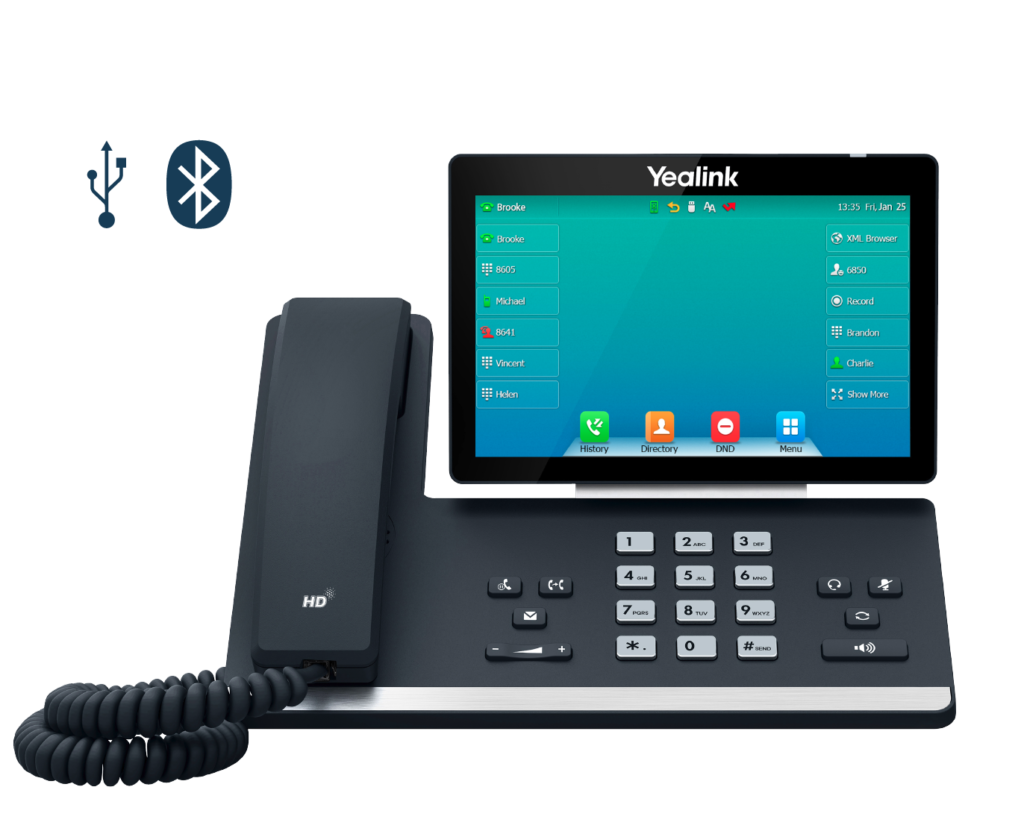
Yealink T57W

Why is the UK moving to VoIP?

The improvement is, without a doubt, long needed. While you’ll be able to keep your landline if you want one, there will be plenty of VoIP-compatible landline phones to pick from which will make receiving calls significantly enhanced. The UK’s original telephone network is nearly a century old, and what we have now is a patchwork quilt of wiring that has been spruced up in some parts and completely replaced in others.

The phone and broadband firms have teamed up to devise a clever strategy that will see a completely revamped network launched in December 2025. The initiative is also monitored by the government and the telecoms regulator Ofcom. The good news is that you won’t have to do anything about the landline phone network update; your landline phone provider should take care of everything and notify you when it happens. 

While the network will change without you having to do anything, if your existing phone does not allow VoIP, you will need to purchase a new phone.

Keypad on phone

Will you be able to keep your number?

Although it’s impossible to say for sure, it appears like you’ll be able to keep your current landline number when the network switches to VoIP. If you’ve had the same phone number for a long time, this is great news. 

However, as we always say, your phone may need to be replaced, especially if you’ve owned it for as long as your phone number. However, anyone who has updated their landline handset in the recent few years may discover that it will work just fine when the time comes to upgrade.

A new phone can completely change the way you use it, especially with the latest models from Yealink and Mitel that use technology to make it easier to avoid annoying calls. In fact, a number of the phones we tested were able to completely block undesirable callers, so that’s money well spent right there. Even more so if you’re getting calls from scammers on a regular basis.

VoIP landline phones: What you need to know

The fact that VoIP landline phones are being rolled out now that many of us have broadband at home seems reasonable. This is because, in the future, you’ll be connecting your calls via the internet, rather than the ageing copper wire network. 

The call quality, which should be crisper and more audible, is one of the primary advantages. You will, of course, require a broadband connection for this to work, so if you haven’t already done so, contact your phone company.

Another thing to keep in mind about phones that rely on broadband, a router, and a power supply to work is that they rely on services being available online. As a result, if you lose electricity, you may be unable to make or receive calls. If you have a backup phone, this isn’t a problem, but if you don’t, it’s something to keep in mind so you know where you are in the event of an emergency.

Why are VoIP phones so good?

Another advantage of having a landline that uses VoIP to connect you is that it is a lot less expensive option to make calls. Of course, you may argue that you’ll need access to the internet, which you might not have had before. On the bright side, having access to the internet is so beneficial that we believe the advantages far exceed any disadvantages. 

While it may seem strange that someone today does not have access to the internet at home, we must acknowledge that not everyone wants it or, in some situations, wants it but is unable to obtain it. If that’s the case, you’re probably reading this on your smartphone right now.

But, returning to the cost issue, let’s face it: for many years, phone companies have done quite well by charging you for making calls, whether they are local, national, or international. If you have a lot of individuals you need to talk to on a regular basis, VoIP phones can save you a lot of money over time. 

Another advantage of utilising a VoIP phone is that it is far more robust than older phones that were connected using outdated technology and a network made up of a jumble of copper wire and fibre cables.

Water penetration is common on older phone lines, causing interference and frequently stopping your connection in its tracks. While VoIP technology isn’t infallible, it should make your phone connection less sensitive to external interruptions than before. 

That could save you money as well, because there’s a lower chance you’ll need to call in an engineer and deal with all the time and aggravation that entails.

VoIP phones typically offer more features and capability, so if you get one of the best landline phone models on the market today, you’ll find yourself with a veritable telecoms powerhouse on your sideboard. That, in the words of an old BT commercial campaign, should mean that it’s ‘nice to chat’ on it once more.

Summary

So as we know, traditional phone lines will be made redundant in 2025 for a new system to come into place. This system will be powered by internet based phones which will heavily involve VoIP. While the need for VoIP is already in demand due to the benefits the system has to offer, the price will increase nearer to 2025 we get.

At ATS Connection we are doing a price fix promise which will mean that for any business who signs up to our VoIP packages, they will not see a price increase due to the demand.

Get in touch

How can VoIP help grow your hotel?

Although VoIP systems have been rising in popularity for decades, many company and hotel owners have yet to adopt this new technology. Regrettably, the longer hoteliers wait, the further behind they will fall.

Consumers are accustomed to fast-paced technology; they do everything online or on their smartphones, and they demand the same level of service and innovation from the businesses they visit, including hotels. You can accelerate your business and attract new guests better than ever before if you can fulfil your clients’ growing needs. Here’s how VoIP can assist you.

Lower costs

Because VoIP phone systems share the same internet infrastructure as your regular internet service, you won’t have to pay two separate utility bills. Furthermore, because VoIP phones do not require the same hardware as traditional telephone lines, you can add or remove lines you aren’t using on the fly using your VoIP provider’s software interface. You don’t even need a physical handset; instead, you can create a new phone number and have it ring your manager’s mobile, so the additional cost is none.

VoIP also provides flexibility, which can help you save money. Long-distance calls are substantially cheaper than analogue calls to other countries since they are routed through the internet rather than the PSTN (which is slowly being switched off), which is a critical feature for many hotels with international guests. Paper faxing can be almost eliminated because VoIP systems can be effortlessly connected with your computer system.

receptionist on VoIP phone

Improved mobility

Face-to-face interaction with visitors is one of the most crucial components of hotel management, but your staff can’t provide the finest service if they’re chained to a desk. With a VoIP system, you may install software on a smartphone or tablet that connects to a Bluetooth headset, allowing your employees to wander freely and speak with customers without ever leaving their phones.

Even better, a phone call does not have to interrupt a conversation with a guest. With seamless forwarding, the employee who answers the phone may simply transfer the call to a less-busy employee, ensuring that your guests receive the attention they deserve.

Managers will benefit from the enhanced mobility as well. You may respond to issues that require your personal attention while keeping an eye on the hotel’s inner workings without missing a call because you can wander around freely. Best of all, no one needs to remember the manager’s mobile number; simply create a “manager” number in your VoIP system and arrange it to automatically forward based on who is working at the moment.

Advanced features

Because hotels generally operate on thin profit margins, anything you can do to increase efficiency is helpful. The advanced features of a VoIP phone system might be extremely beneficial in this regard.

Not only can you connect your phones to your computer system, enabling features like online check-in, automated wake-up calls, and personalised voicemail in each room. The more features like this you can add, the better your visitor experience will be and the more you’ll be able to expand.

receptionist on VoIP phone

“Using a VoIP phone system has been one of the best decisions I have made for my hotel”

Better productivity

Many tasks in a hotel’s day-to-day operations are repetitive and tedious to your employees, such as organising wake-up calls, printing room keys, and answering basic enquiries regarding restaurant hours. Many of these processes may be performed considerably more efficiently with a modern VoIP system and digital PBX.

This will allow your team to focus on the far more valuable work of providing good guest experiences. The cornerstone of any hotel stay is in-person engagement, but your workers won’t have time to talk to guests if they’re also working at a desk. Your staff will be more productive and satisfied with their work if they can wander around the hotel helping visitors in person, and your hotel will profit.

The benefits of VoIP

What is VoIP?

VoIP stands for Voice over Internet Protocol and is nearly identical in operation to a traditional PBX, but rather than using onsite hardware, calls are routed via the internet. It’s ideal for supporting your remote or hybrid workforce, where staff can take calls as if they were sat at their desk in the office. All without costly call forwarding to mobile phones.

Technology has come a long way in the last few years but the needs of businesses have come a long way too. Needing to stay connected to colleagues and consumers at all times wherever you may be in the world, the ability to offer a respectful customer service and to build your businesses up are all ways in which the demands of a business has increased.

How does VoIP work?

To put it simply, instead of having phone lines and wires VoIP replaces them with an internet connection. Converting your voice into data when you speak and converting back to voice on the receiving end, crystal clear with no delay.

Okay, so we know how it works, but how well does it work? VoIP has a 99% uptime and if the small chance of some downtime, your mobile phone app will still allow you to make and receive calls. To top this off, VoIP problems can be fixed remotely within a matter of minutes meaning no expensive call out charges for an engineer to attend the site, getting you back running as usual in no time.

Ultimately the choice between VoIP or onsite will come down to your business needs, but in almost every case, hosted VoIP will be a good fit. Here’s why:

Lower cost per call

VoIP is best known for how cheap it is to make a call. Those low costs are due to the fact that VoIP uses your existing internet connection. This goes for international calls as well as domestic. The only new charge you have to think about is the monthly price of the hosted VoIP service you use, your team members are free to make as many calls as they want to, to each other. Compare this to traditional landlines that require hardware like wires, installation and expensive phone bills!

Yealink T54W

Work from anywhere

With hybrid working expected to become the new normal for working practices once ‘stay at home’ advice is relaxed, businesses need staff to be able to communicate wherever they are located.

A phone solution like VoIP will likely come with an app that allows you to make calls on your mobile phone, laptop, and even tablet. This means you can work from anywhere with an internet connection. That way, even if you cannot see colleagues and clients in person, your team can operate at full capacity and productivity levels, even if you’re not physically together. And in many cases team members will be able to keep a single number, regardless of travel or moving from one workspace to another, easy!

Scale it up as you grow

The number of people in your business can go up or down, but scaling up or down accordingly isn’t that easy with a regular telephone system. You have to purchase a handset or a dedicated physical line, which gets expensive. This often results in the need to use clumsy workarounds, like sharing phone sets between users.

With VoIP, scalability is not only easily available, but is also good for keeping your costs low. All you have to do is ask your service provider to add more lines when your team is increasing or remove a line when someone moves on. At any given point of time, you’ll only be paying for what you are currently using.

In other words, VoIP systems can grow comfortably alongside your business, no matter what your size.

Man using a VoIP phone

“VoIP has transformed the way we can stay connected with out clients, anywhere at anytime.”

Packed with features

Calling is more fun with VoIP phone systems, because these phone systems are often accompanied by a variety of attractive features. Call waiting, call transferring, voice recognition, call forwarding, voicemail, caller ID, call blocking, automatic call distribution, etc. are just some of the many features that you may get to choose from, in your hosted VoIP service.

VoIP systems are feature-rich solutions that enable employees to operate as if they were in the office, even when they’re not. You can send voicemails to instant messaging or emails if the intended recipient isn’t available at the moment. It’s easy for organisations to centralise VoIP communication for better coordination. Other features include mobile integration, auto attendant, advanced call routing, conferencing, and call recording.

Integration with other softwares

Given the fact that VoIP is a technology based on the Internet, its integration with your normal business apps and software can be easily achieved.

You could combine VoIP with your email system, and be able to place calls through the email system itself or even with your CRM system, that way you can merge call records of a customer into the customer’s profile.

VoIP also works well with Microsoft Teams so that users can make and receive regular telephone calls either with their Teams app or with physical telephones.

You can schedule online meetings, chat to your co-workers and communicate easily between staff and customers. There are options to create a private or group chat whilst sharing files.

Increase productivity

The way VoIP works, the features it contains and the user friendliness of them allows for staff to become much more productive. Providing staff the ability to host virtual meetings, conduct international phone conferences at a small cost, attach important documents, share significant data through video conferencing and communicating with colleagues on a private chat software.

In recent years VoIP has really taken off quite significantly, especially in terms of voice clarity to the point that it can be clearer than your traditional phone line conversations. When VoIP first came to the market it was in need of some improvement: distorted calls, dropped calls and lagging transmissions to name a few. This is no longer the case and VoIP has now become one of the most popular ways of communication for businesses of all shapes and sizes.

Reliable and ready for ISDN switch off

In 2025, the UK’s ISDN network will be turned off. This means traditional telephone lines are being switched off, and more businesses will need to move to VoIP, so now is the time to set up your business with a digital phone line.

For a more in-depth overview about the 2025 switch off, what it means for your business, and whether to make the switch earlier with a possible cost saving, read our ISDN switch off page.

To find out more about how VoIP can transform your business, speak to one of our experts, contact us here.

ISDN to SIP – what does it mean?

ISDN to SIP – what does it mean?

Traditionally, Integrated service digital network (ISDN) technology allowed inbound and outbound voice calls through a ‘digital’ line – through the internet. But SIP trunking is now replacing ISDN services, which means ISDN will slowly be phased out over the next 5 years. Why? Because it’s better technology. Think 5G replacing 4G, which replaced 3G in turn. Gradually, they are then phased out as new technology comes along. Not only is it better technology, it’s also cheaper, more flexible and can help business future-proof their telecommunications systems.

What is ISDN?

ISDN stands for integrated service digital network. It originally appeared back in the 80’s but is still widely used in businesses. It became popular due to the fact that it allowed the opportunity to transmit both voice and data over the same line.

ISDN is a digital line that runs through copper wiring. It was a lot faster than traditional analogue lines and could be used for data as well as carrying voice calls. The main issue with ISDN is that it relies on physical infrastructure, the copper lines, which can be costly to maintain. It also requires an additional private telephone network that is used within the company (also known as a private branch exchange or PBX).

In a nutshell, ISDN takes up space, is costly to maintain and cannot easily be fixed when things break.

Replacing ISDN with SIP trunking

Session Internet Protocol (SIP) trunking is the next-in-line future-ready solution to replace ISDN. It’s still a digital connection, ensuring calls are transmitted via the internet. However, it connects the PBX to the network via broadband, Ethernet or a private circuit. It enables you to make calls via the internet. (NB: SIP is also known as VoIP, which struggled to take off due to early signal issues and problems. Therefore, SIP came along as technology advanced, enabling more reliable and scalable communication options for businesses.)

The trunking part? Well, that is a tech-jargon for a system which provides network access to many people by sharing a set of lines. Think of a tree trunk with many branches running off it or a network with a central hub. A ‘trunk’ is one communications channel between one point and another, typically one being the central hub.

SIP enables businesses to mange their communications more easily and have a more reliable solution that is flexible to their business needs.

Why does my business need SIP?

The main reason you should switch to SIP, is because ISDN is on its way out. BT completely plan to phase out ISDN by 2025, with Internet Protocol (IP) calling seen as a much-preferred alternative. We highly, recommend getting yourselves into the modern world and upgrading your phone lines. But don’t just take our word for it. Here’s more reasons why you should be looking at moving from ISDN to SIP.

You’ll save money

One of the major benefits of upgrading to SIP is that you can see unprecedented savings on your call costs. SIP means running your calls via the internet, which takes out the need for physical infrastructure and therefore, maintenance. It is suggested that business can save up to 50% on their business calls on average.

What’s more, as your line is run through the internet, providers often give you inclusive minutes included within your monthly charge. You can make even more savings, the larger your business too.

You get flexibility

With SIP adding new lines is really simple – in fact, it can be done in less than a minute. Calls via the internet can help you to meet business demand and control where your calls go easily.

Setting up new offices or working remotely is a lot easier as there’s no need for installing new lines. It also enables a business to keep their existing numbers, even when they move locations.

SIP trunking is scalable, which means it can be grown with your business really easily.

You get more reliability

When traditional ISDN connections go down, it can be timely and difficult to fix. Your business can be out of action for hours, if not days. Business continuity is reliant upon maintain connections.

With SIP trunking you get a new level of resilience. Your calls can be diverted to a different line or redirected to another office. It also enables calls to be redirected to mobiles too, which can be great for remote workers or employees out for meetings.

Stepping towards SIP

Switching lines can be met with resistance. Particularly, because traditionally switching can cause disruptions within a business.

However, your switch to SIP can be flexible. You can switch in one move or phase the transition by each site, office or even floor. One of the best benefits is that SIP can actually work alongside ISDN so there’s no need to worry about down time.

In fact, there’s little disturbance to your business activities, if any. Testing and checks can be carried out in a controlled environment too.

With the removal of ISDN there is no good reason to continue using old phone lines. Especially, when you can save money, get more reliability and have calls that can meet your business demand.

For more information about making the transition from ISDN to SIP trunking, contact our team at ATS Connection today on 01903 357002  today or get in touch.